 English GB
 Español
  Français
  Deutsch
  Italiano
  Português PT




What does the EN 388 standard mean for protective gloves? Technical Interpretation

Protective gloves represent a basic yet crucial safety component in many industries, from hospitality to high-risk environments such as petrochemicals or welding. When a worker handles machinery, sharp tools, or abrasive materials, their only line of defense is their gloves. However, not all gloves are the same, and the EN 388 standard is the universal language that allows us to determine which gloves are suitable and which are insufficient.
The pictogram for mechanical risks (EN 388): The foundation of protection
The EN 388 standard specifies quality and protection standards and constitutes the technical reference framework for the certification and evaluation of protective gloves against mechanical risks. The standard strictly defines the testing methods, performance levels, and mandatory marking requirements that all PPE must meet to ensure effective protection against abrasion, blade cuts, tearing, puncturing, and impacts, not always applicable.
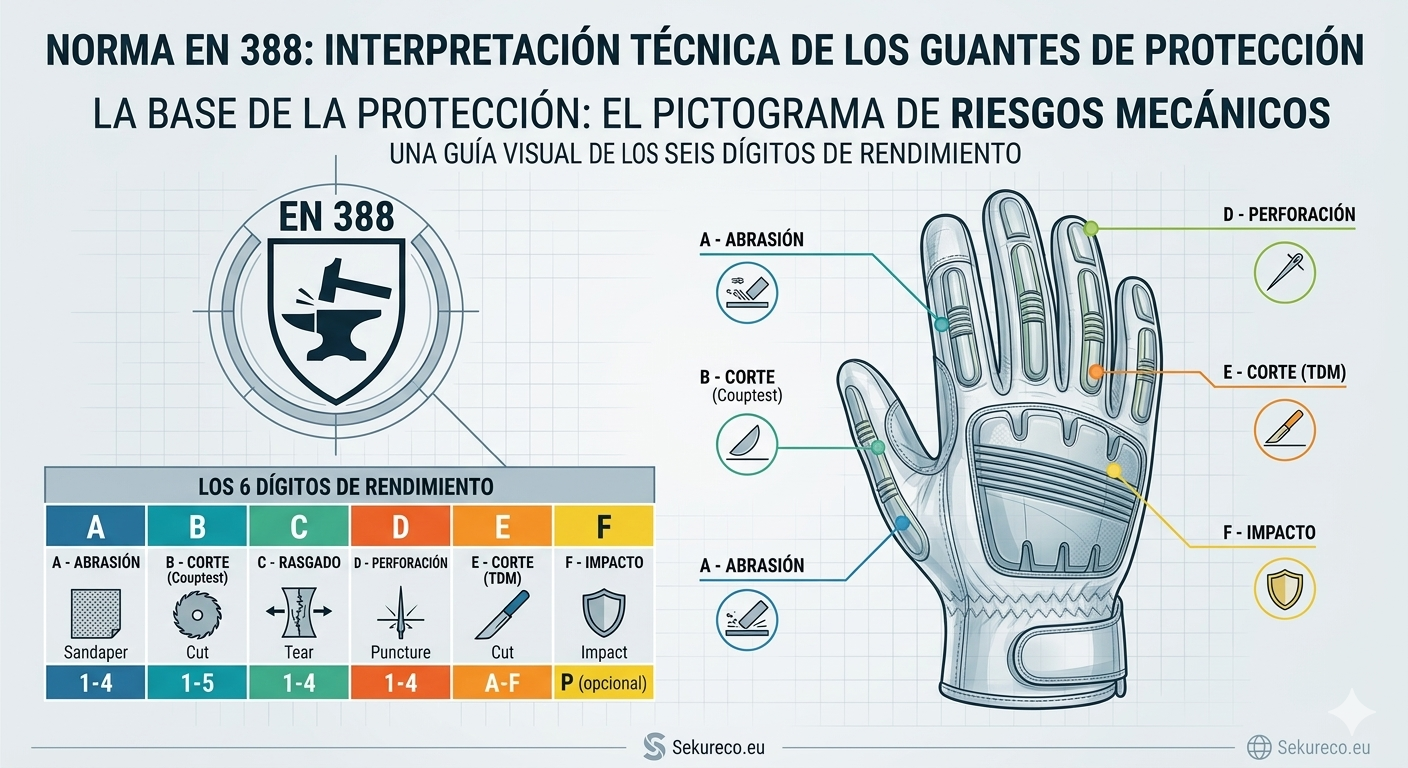
The pictogram of a hammer (EN 388) is probably the most recognized symbol in the world of Personal Protective Equipment (PPE), but also the most misunderstood. This icon not only indicates that the glove protects against mechanical risks, but it also unfolds a 6-digit performance matrix that defines the material's behavior against different aggressions.

The 6 digits of EN 388:2016+A1:2018 explained
To understand a protective glove, we must be able to read its label. Digits 1 to 4, plus the 5th (letter) and the 6th (optional letter), describe the glove's protection capacity:
-
Abrasion (Digit 1): measures how many sanding cycles are required to wear down the material. It is rated from 0 to 4. A level 4 guarantees superior durability in construction environments.
-
Blade Cut (Couptest) (Digit 2): the traditional method. A circular blade moves across the material. It is rated from 0 to 5.
-
Tearing (Digit 3): measures the force needed to tear the glove. Critical in environments where the glove may get snagged.
-
Puncture (Digit 4): describes the force needed to penetrate the material with a standard puncture tool.
-
TDM Cut (ISO 13997) (Digit 5 - Letter): this is the significant change from the 2016 standard. It is measured with a straight blade that applies a constant force (N) until it cuts through the material. It is scaled from A to F.
-
Impact Protection (Digit 6 - Letter P): if the glove has reinforcements (TPR), it is marked with a 'P'. If not, this space remains empty.
The crucial difference: EN 388:2003 vs. EN 388:2016
The 2003 version was insufficient for new materials (glass fibers, steel, HPPE). These materials dulled the blade of the "Coup" method (Digit 2), giving falsely high results. The 2016+A1:2018 standard introduced the TDM method (Digit 5) to require testing the material in a way that does not allow this technical "deception." If a glove does not have the TDM letter, it is outdated.
Examples of certified protective gloves
At Sekureco.eu, we work with brands that comply with this standard, such as our high-visibility models with level 4 abrasion and TDM cut 'D', ideal for heavy logistics where box handling is combined with the risk of cuts from strapping.
Understanding EN 388 is moving from just buying gloves to investing in safety solutions. Reading the label is the first step to protecting your workers.
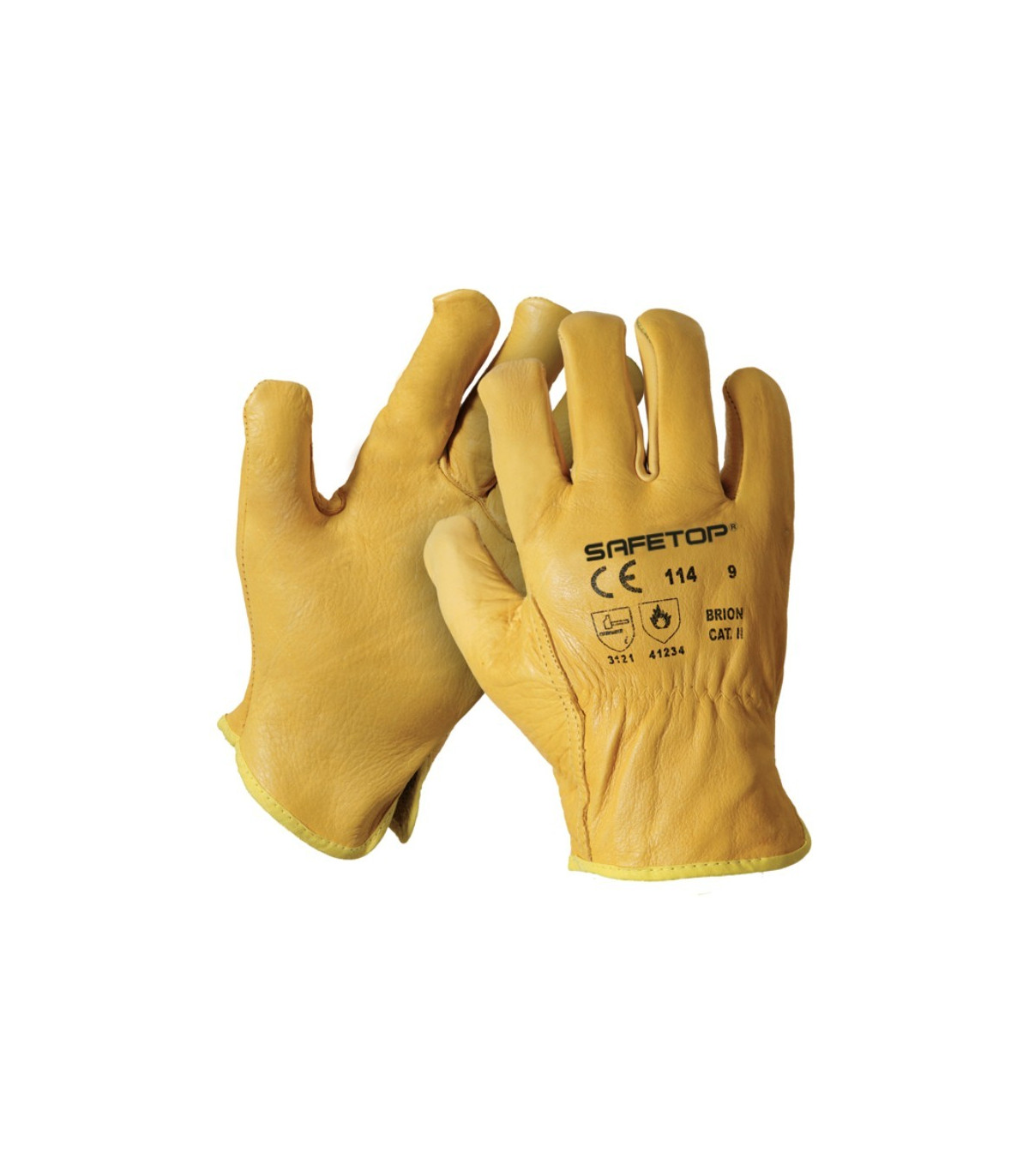
Elastic gloves made of top-grain cowhide SAFETOP conductor type Brión
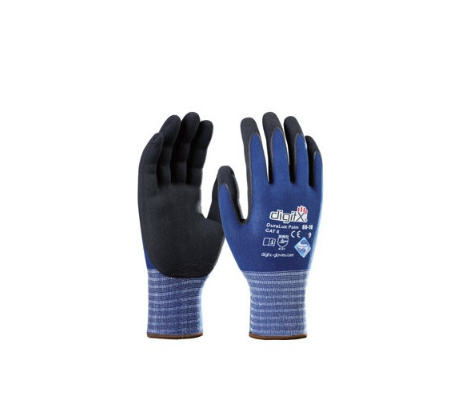
Nitrile gloves Range Digitx Duralux Palm
Microporous nitrile foam glove JUBA 111801 ECO-NIT

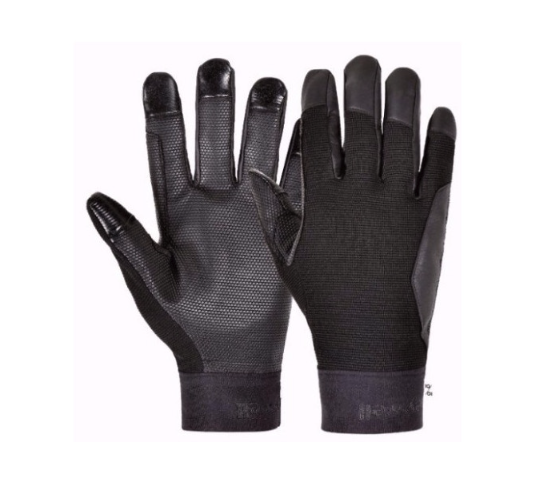
Urban puncture and cut-resistant glove Honeywell
Do your current gloves comply with the 2016+A1:2018 standard? Explore our catalog of mechanical protective gloves, and ensure that your protection is not outdated.
Frequently Asked Questions about the EN 388 standard in protective gloves
What does the 'X' mean in the EN 388 pictogram?
The appearance of an 'X' in the position of any of the digits (for example, 4X43) does not mean that the glove has failed that test or that it is a defective product. It simply indicates that the test has not been performed or is not applicable for that glove design.
For example, if an extremely fine fabric glove is not designed to resist puncturing, the manufacturer may choose not to perform that test; in that case, they will mark an 'X'.
What is the maximum abrasion level in safety gloves?
The maximum abrasion level under the EN 388 standard is Level 4. To achieve this score, the glove material must exceed 8,000 abrasion cycles (performed with sandpaper under controlled conditions).
In practice, a glove with Level 4 abrasion is essential for environments where the worker constantly handles rough surfaces (such as concrete blocks, bricks, or cast pieces). A glove with abrasion level 1 or 2 would wear out prematurely in these tasks.
Is impact testing (P) mandatory?
No, impact testing is not mandatory. It is an optional test governed by the EN 13594 standard. A glove can only carry the marking 'P' (Pass) if it has successfully passed the impact energy absorption test.
What Couptest cut level (digit 2) corresponds to a letter 'B' in TDM (digit 5)?
There is no direct equivalence or conversion formula. Attempting to equate them is a serious technical error. They are two entirely different testing methods:
-
The Couptest (Digit 2): Uses a circular blade that rotates with a constant force. It is excellent for standard natural or synthetic fiber gloves.
-
The TDM test (Digit 5): Uses a straight blade with increasing force until it cuts through the material. It is the most rigorous and mandatory method for materials that dull the circular blade (such as glass fibers, steel, or high-density materials).