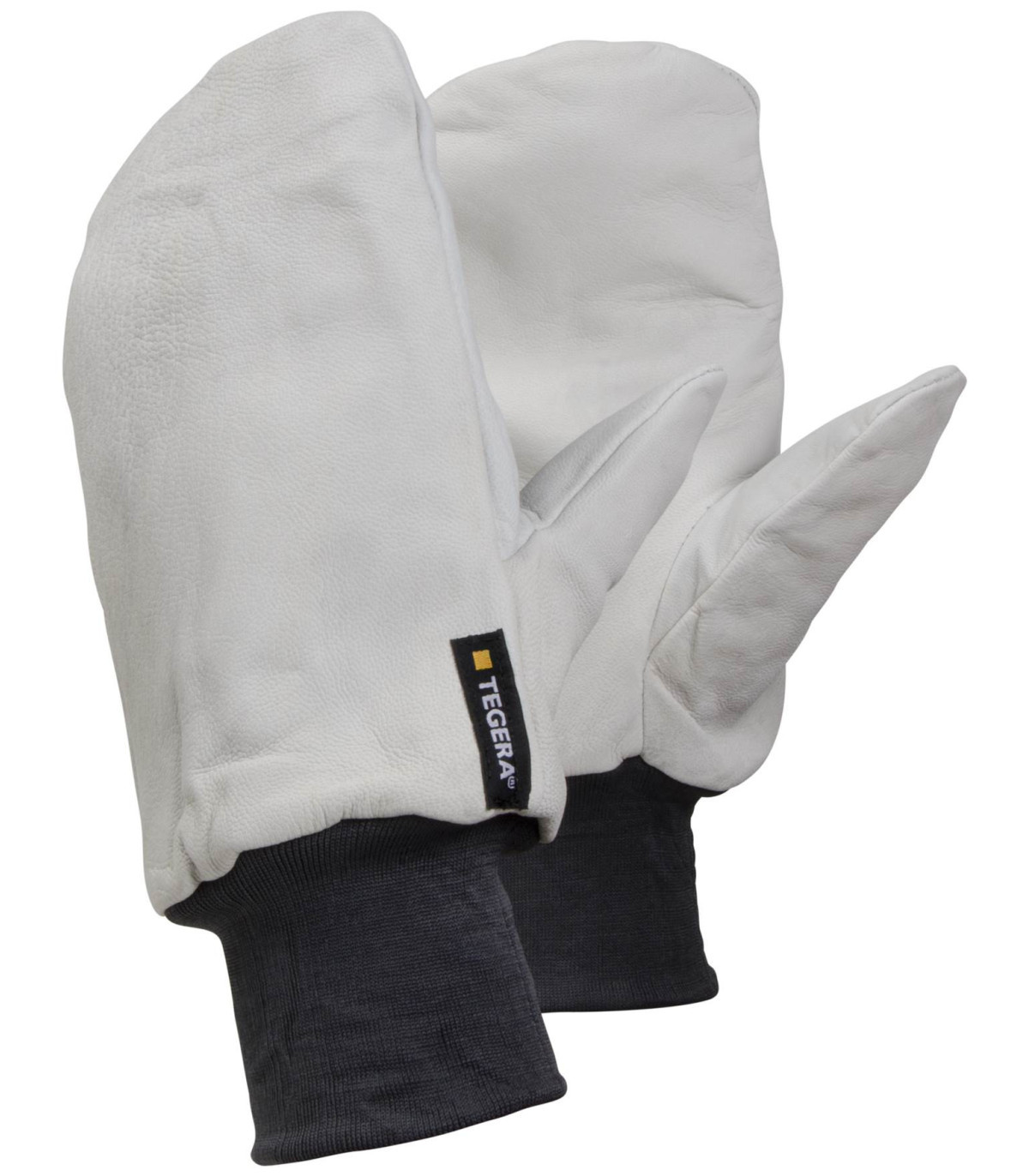
Work glove for cold and demanding tasks, made with goat leather and a warm lining to maintain dexterity in low temperatures. Knit cuff for improved fit at the wrist. A common choice if you need a winter leather glove for outdoor use and material handling.
FEATURES
- Mitten design (1 finger) for better heat retention
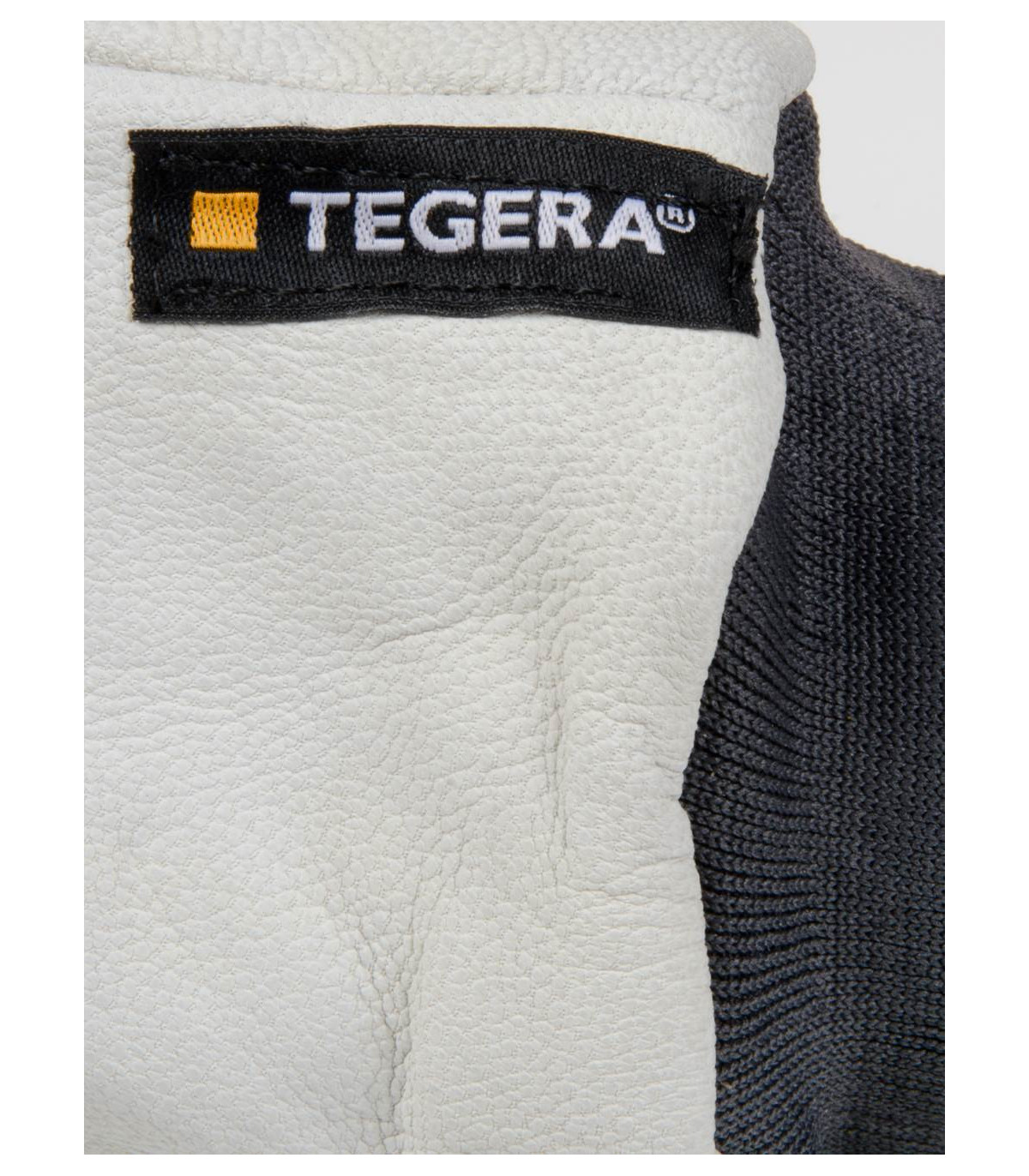
- Goat leather on palm and back
- Warm synthetic fur lining
- Knit cuff for wrist adjustment
- Intended for use in cold and wet environments
- Leather with water-repellent finish
- Designed for heavy-duty work
BENEFITS OF TEGERA 10 LEATHER GLOVES
Provides warmth and mechanical protection for outdoor work where tools, materials, or loads are handled in cold conditions. The mitten format reduces heat loss compared to five-finger gloves, and the knit cuff helps limit air and snow entry. Goat leather enhances grip feel compared to stiffer materials, maintaining practical use in repetitive tasks.
USES AND APPLICATIONS: WHAT IT IS SUITABLE FOR
Suitable for outdoor work in cold conditions, with possible exposure to moisture: construction and building, land preparation, transportation, and service tasks. It is also used in activities where warmth and durability are prioritized in handling materials and tools.
TECHNICAL DATA
- Type: insulating glove against cold, mitten type
- Material (palm and back): goat leather (full grain)
- Lining: warm, synthetic fur
- Cuff: knit
- EPI Category: Category II
- Standards: EN 388:2016+A1:2018 (2322X)
- Standards: EN 511:2006 (22X)
- Standards: EN ISO 21420:2020
REGULATIONS
The EN 388:2016+A1:2018 standard evaluates the resistance of gloves against mechanical risks, and with a classification of 3143X, this product offers robust and durable protection in demanding work environments. It stands out for its high abrasion resistance (level 3), ensuring a long lifespan when handling rough materials, as well as exceptional tear resistance (level 4) and effective capacity to prevent puncture by sharp objects (level 3); however, given its level 1 in cut resistance and the lack of TDM testing (X), it is essential to inform the user that this glove is not suitable for tasks involving a high risk of deep cuts or contact with very sharp elements.
EN 511:2006 22X
The EN 511:2006 standard certifies the gloves' protective capacity against thermal risks from cold, both by convection (air) and by direct contact with cold surfaces. With a classification of 22X, this equipment offers a moderate level of protection against convective cold (level 2), proving effective in environments with drafts or low temperatures, and an equivalent resistance against contact with cold objects (level 2), which delays the loss of body heat when handling icy materials; however, as it presents an "X" in water permeability, it is crucial to warn the user that this glove has not been tested against moisture, so its effectiveness is maintained only in dry environments, and its use is not recommended if there is a risk of immersion or heavy rain that could compromise its insulating capacity.
EN ISO 21420:2020
This standard constitutes the safety basis for any protective glove, ensuring that the equipment is harmless, ergonomic, and comfortable for the worker. Its main function is not to evaluate a specific risk but to ensure that the materials used do not contain harmful substances that cause allergies or irritations.
FREQUENTLY ASKED QUESTIONS ABOUT TEGERA 10 LEATHER GLOVES
What is the difference between a mitten and a five-finger glove?
The mitten usually retains heat better because the fingers share temperature. In exchange, it may reduce precision in fine tasks; it fits better when warmth and general handling are prioritized.
Is it suitable for work in cold and wet conditions?
It is designed for cold environments and also for wet conditions. The leather has a water-repellent finish, making it suitable for splashes and ambient moisture, maintaining outdoor use.
What protection do the EN 388 and EN 511 standards indicate?
EN 388 evaluates mechanical risks (such as abrasion, blade cut, tearing, and puncture) and EN 511 evaluates protection against cold. The marking codes reflect the level achieved in each test.
 English GB
 Español
  Français
  Deutsch
  Italiano
  Português PT










@CUSTOMER_NAME@
@AUTHOR_PROFILE@ @COMMENT_ISO_COUNTRY@ @VERIFY_PURCHASE@@COMMENT_TITLE@
@COMMENT_COMMENT@