English GB
 Español
  Français
  Deutsch
  Italiano
  Português PT



€0.97
€0.97
(TAX incl.)
€0.80 (no TAX)
€0.80 (no TAX)
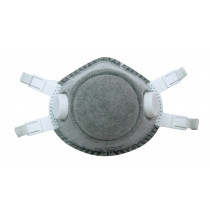
Disposable Ffp1 Nr Masks.Preformed cellulose mask.
Wide range of security products for any type of industry and work
know us


In today's industrial environment, safety is non-negotiable. A Personal Protective Equipment (PPE) is the primary line of defense for workers against risks that may threaten their safety or health within the workplace and that cannot be eliminated through collective or organizational protections. In this article, we break down the legal definition under the Regulation (EU) 2016/425 and the exact scenarios where its use is mandatory by law in the European Union.
According to Article 3 of Regulation (EU) 2016/425, a PPE is defined as any device or means that is intended to be worn or held by a person to protect against one or more risks that may threaten their health or safety.
It is crucial to distinguish between a PPE and common work clothing, as while a corporate uniform seeks aesthetics or hygiene, a PPE must be certified to mitigate specific risks such as:

The obligation to use PPE does not depend on the worker's desire but on the Risk Assessment carried out by the prevention technician (PRL). Use is mandatory when:
The obligation of PPE arises from the Risk Assessment of the workplace, the document of which is drafted by the specialized technician in Occupational Risk Prevention (PRL), who detects and identifies remaining hazards. If the assessment indicates that there is a risk of falling objects, the use of a helmet (EN 397) becomes legally mandatory. The legal responsibilities for using such equipment lie with both the employer and the worker:

PPE is classified according to the severity of the risk it mitigates. This classification is vital for understanding certification:
For a correct selection at Sekureco.eu, it is essential to consider the type of risk to which one will be exposed and cross-reference it with the certified product.
In heavy industries such as construction or mining, the use of helmets certified under the EN 397 standard is mandatory, such as the Ventilated Safety Helmet X5001VE-CE 3M that protects against impacts from falling objects.
Regarding respiratory protection, the use of masks in environments with crystalline silica, asbestos, or chemical vapors above the Environmental Limit Values (ELVs) is crucial. The EN 149 standards for self-filtering masks or EN 140/136 for half masks or full masks regulate the use of this PPE within industries such as food, medical/surgical, and industrial environments at risk of exposure to hazardous dust.
For professionals performing tasks with fall risks from heights greater than 2 meters (or according to specific assessment), the use of equipment such as fall arrest harnesses regulated under the EN 361 standards is crucial.
In cutting, grinding, welding, or handling corrosive liquids tasks, the use of welding screens or polycarbonate glasses according to the EN 166 standard, which establishes the minimum safety standards for personal eye protection, is mandatory.
Depending on the industrial activity and the persistent risks, the appropriate selection of PPE will depend. If you need to equip your team with certified material, explore our catalog of high-end Personal Protective Equipment and ensure your company's regulatory compliance today.
Can a company charge the worker for the PPE?
No. Article 9 of Directive 89/391/EEC and Regulation 2016/425 explicitly prohibit the cost of safety and health measures at work from falling on workers. PPE must be free and replaced when necessary.
The obligation to use remains as long as the risk persists. However, the equipment ceases to be effective (and therefore its use no longer guarantees protection) if it has exceeded its expiration date (common in helmets and harnesses) or if it has suffered a strong impact.
If a piece of equipment does not have the CE marking, it is not legally a PPE in the European Union. Its use does not comply with legal obligations, and in the event of an accident, the responsibility will fall on the employer for providing certified material.
Generally not for industrial risks, but the company must assess ergonomic risks. However, if the worker handles chemical products or power tools at home on behalf of the company, the corresponding PPE remains mandatory.
Yes, as long as it complies with the EN ISO 20471 standard. It is mandatory in environments where the visibility of the worker is critical for their safety, such as roads, airports, or loading areas in warehouses.
> CLOTHES AND COMPLEMENTS
Please sign in first.
Sign in