 English GB
 Español
  Français
  Deutsch
  Italiano
  Português PT




Protecting energy infrastructures: The commitment of KRATOS SAFETY and Sekureco

The global energy landscape is undergoing an unprecedented metamorphosis. With sustained sector growth of around 2% annually and an explosion of renewable energies exceeding 15%, the industry is not only seeking to be greener but also smarter and more technologically advanced. However, this massive deployment of infrastructure—from 150-meter tall wind turbines to vast expanses of photovoltaic fields—brings with it a critical challenge: occupational safety in high-complexity environments.
In this context, the protection of workers has ceased to be a mere administrative procedure and has become a strategic priority. KRATOS SAFETY, as a leading manufacturer, and Sekureco, as a specialized distributor, join forces to offer solutions that not only meet standards but also save lives in the daily operations of the energy sector.
1. The Major Challenges of the Current Energy Sector
The operability of an electrical grid or a wind farm directly depends on maintenance capacity. Companies today face three pillars that define their success and safety:
A. Performance and Operational Continuity
Energy infrastructures are critical; an unplanned shutdown can result in millions in losses and supply issues. This necessitates constant inspection and repair interventions, often under time pressure. Protective equipment must allow technicians to work quickly without sacrificing safety.
B. Field Response Capability
Unlike a controlled factory, the energy sector operates in "the wild." Equipment must be easy to transport, quick to install, and intuitive enough to be used in stressful or low-visibility conditions.
C. Evolution of Occupational Risks
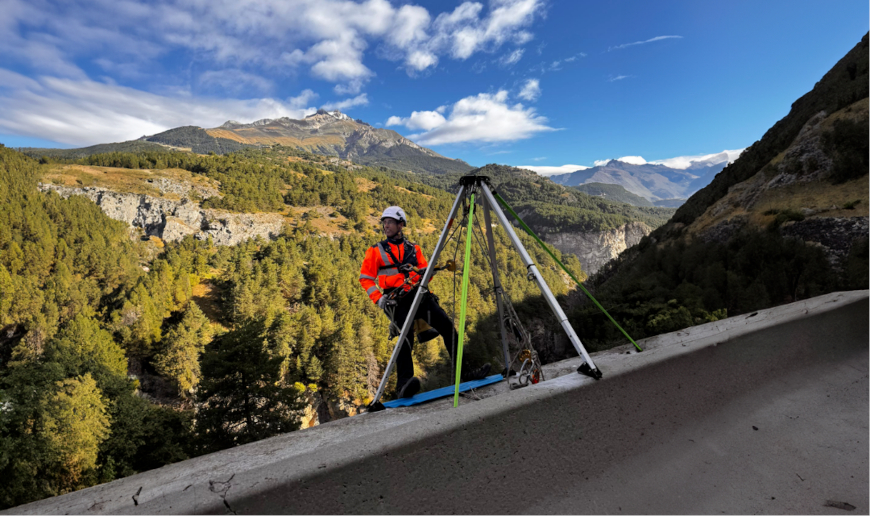
The increasing height of wind turbines, the complexity of high-voltage towers, and the need to work in confined spaces (such as inside the blades of a windmill or hydraulic galleries) demand protection that goes beyond the standard.
2. X-ray of an Extreme Risk Environment
To understand why the choice of PPE is critical, we must analyze the factors that converge in a conventional energy installation:
- Extreme Height Work: Especially in the wind and electrical transport sectors.
- Prolonged Vertical Access: The use of endless ladders or vertical lifelines requires systems that minimize fatigue.
- Confined Spaces: Areas with limited ventilation and restricted access where rescue is extremely complex.
- Adverse Environmental Conditions: Workers face gusty winds, marine humidity (corrosion), extreme cold, or direct solar radiation on photovoltaic roofs.
- Remote Areas: In case of an accident, evacuation can take hours. Here, the rescue team must be an integral part of the work team.
Learn about our safety harnesses here
3. KRATOS SAFETY: Engineering Applied to the Reality of the Worker
Unlike other manufacturers that offer generic products, KRATOS SAFETY stands out for its focus on ergonomics and real functionality. Each piece of equipment is developed with the understanding that the worker will spend eight hours or more suspended in a harness or anchored to a structure.
Technical Innovation in Design
From the prototyping phase, KRATOS integrates:
- Reduction of Physical Effort: Through the use of lightweight yet ultra-resistant materials.
- Total Compatibility: Systems are designed to work together (harness + fall protection + lifeline), avoiding dangerous incompatibilities.
- Corrosion Resistance: Essential for offshore environments or hydraulic dams.
Recommended harness from Sekureco: 3-point harness with extra comfort belt HYBRID AIRTECH 2 KRATOS SAFETY
4. Key Solutions: From Harnesses to Motorized Systems
We analyze the products that are making a difference in current infrastructures:
High-Performance Harnesses
Not all harnesses are the same. For the energy sector, KRATOS offers models with multiple anchoring points, padded positioning belts, and automatic buckles that allow for quick adjustments even while wearing gloves. Their design aims for optimal weight distribution to avoid harness syndrome and reduce lumbar fatigue.
Mobile and Vertical Fall Protection Systems
In high-voltage towers or wind turbine ladders, mobile fall protection is essential. These devices accompany the worker during ascent and descent, locking instantly in the event of a fall. The stainless steel variant is the preferred choice for high-salinity environments.
Revolutionizing with Motorized Systems
One of KRATOS's strengths is its range of motorized devices. These systems allow for the lifting of loads and, most importantly, facilitate vertical access and rescue without requiring the worker to exert superhuman effort. This directly translates into improved productivity and a drastic reduction in musculoskeletal injuries.
The Importance of Anchors
KRATOS has one of the most extensive ranges of anchors on the market, including temporary, transportable, and permanent solutions. A good anchor point is the foundation of the entire safety chain.
Recommended fall protection from Sekureco: Retractable fall protection of 7 m and 10 m for vertical and horizontal use, resistance 12 kN, HELIXON-S cable KRATOS SAFETY
5. Specific Applications by Sector
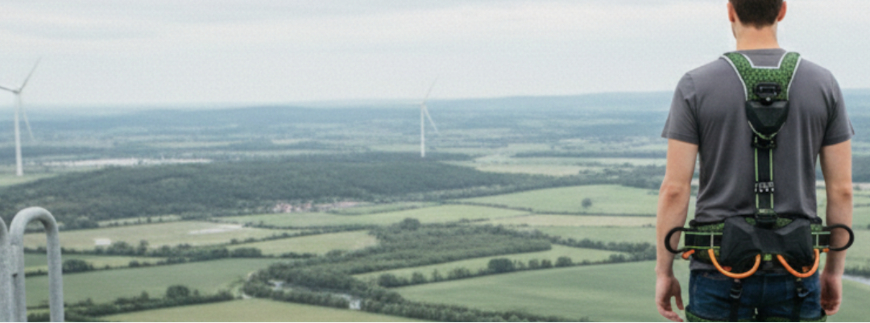
A. Wind Energy (Onshore and Offshore)
This is perhaps the most hostile environment. Protection against falls from great heights is required, but also specific equipment for emergency evacuation from the nacelle. KRATOS solutions for this sector are certified to withstand the most extreme weather conditions.
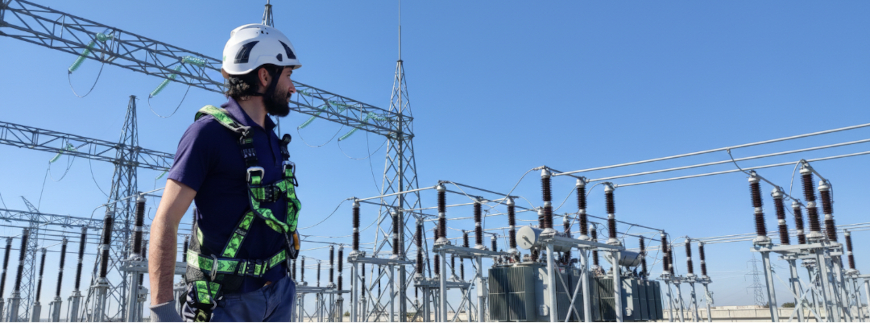
B. High Voltage Power Lines
Here, mobility and lightness are key. The worker needs to position themselves with their hands free to manipulate cables or insulators with total precision. KRATOS positioning systems are benchmarks in this field.
C. Photovoltaic Installations
Although the height risk seems lower, falls from industrial roofs are one of the leading causes of fatal accidents. Temporary lifelines that are easy to install and lightweight harnesses that allow for comfortable work under the sun are required.
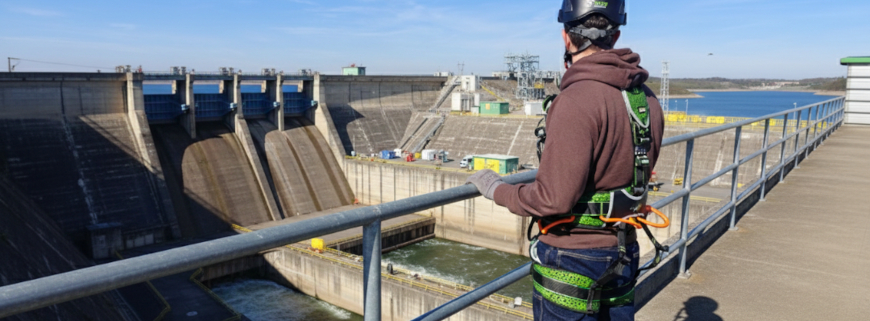
D. Hydroelectric Plants and Dams
In these critical infrastructures, access is often vertical and wet. Tripod and winch systems for confined spaces are vital for the maintenance of turbines and inspection galleries.
6. Value-Added Services: Inspection and Training
PPE is not safe if it is not in perfect condition. KRATOS SAFETY and Sekureco offer comprehensive support that goes beyond sales:
- Inspection Management: Thorough control of the mandatory periodic reviews of each piece of equipment.
- Specialized Training: Having the best equipment is not enough; you must know how to use it. We offer training in safety procedures, rescue, and proper use of complex systems.
7. Sekureco: Your Strategic Partner in Energy Safety
At Sekureco, we understand that each client and each project has unique needs. Therefore, our collaboration with KRATOS SAFETY is not limited to "selling" products.
Our advisory process includes:
- Environment Analysis: We evaluate the real risks in the workplace (height, corrosion, confined spaces).
- Optimized Configurations: We select the compatible equipment that best fits the task, always seeking maximum operational efficiency.
- Complete Solutions: We design the safety system from start to finish, from anchoring to harness and rescue plan.
Learn about our retractable steel cable fall protection here
Conclusion
The energy transition is a driver of progress, but it should not be built at the expense of workers' integrity. Safety must be planned and integrated from the very first minute. With the technical solutions from KRATOS SAFETY and the expert advice from Sekureco, companies in the sector can face their challenges with the peace of mind of knowing they have the best protection available on the market.
Do you need to improve safety in your facilities? Whether for height work, lifelines, or rescue systems in confined spaces, at Sekureco we are ready to help you define the ideal solution for your environment.