 English GB
 Español
  Français
  Deutsch
  Italiano
  Português PT




€76.03
€76.03
(TAX incl.)
€62.83 (no TAX)
€62.83 (no TAX)
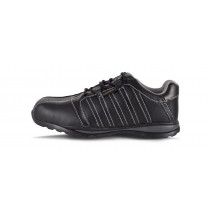
Leather lace-up shoe with rubber sole.
Composition: Suede leather
Wide range of security products for any type of industry and work
know us


Safety footwear is an essential aspect within Personal Protective Equipment (PPE). We know that inadequate footwear not only compromises the worker's foot health but is also a direct source of serious occupational risks, from crush injuries and punctures to falls from different heights.
At Sekureco, we understand that safety footwear is a technical tool that must balance three fundamental factors: regulatory protection, ergonomic comfort, and durability in extreme usage conditions. Therefore, we delve into these three aspects to develop the specialized principles your company should consider when providing safety shoes or boots to its team, while also explaining the differences between the S1, S1P, S2, and S3 markings.
The CE marking is the mandatory legal requirement for any PPE to circulate in the European market. However, in the case of footwear, the EN ISO 20345 standard is the regulation that dictates the technical specifications. This standard classifies footwear with safety toes (capable of withstanding an impact energy of 200 joules) and defines the categories S1, S1P, S2, S3, S4, and S5.

The safety of footwear consists of multiple technical elements that interact with each other:
The toe cap: It can be made of steel, aluminum, or composite materials. While steel is a classic for its strength, composite offers superior thermal insulation and is preferred in environments with metal detectors.
The puncture-resistant insole: This aspect is fundamental in construction or waste management environments. Currently, textile insoles (like Kevlar) have gained ground over metal ones due to their flexibility and lightness, while still meeting the resistance of 1100 Newtons.
The upper (vamp): Here is where we mainly differentiate the S1 categories from S2 and S3. The ability of a material to be water-repellent determines the suitability of the footwear for outdoor work.
Discover the Portwest safety boots and their benefits.
The alphanumeric coding of our footwear allows safety managers to select the exact model according to the risk matrix:
The S1 footwear includes a 200 Joule safety toe, is anti-static, and has energy absorption in the heel. It is the logical choice for dry industrial or logistical environments where there is no risk of falling sharp objects to the ground or exposure to liquids.
At the S1 level, we add a puncture-resistant insole. It is versatile footwear for dry environments in construction, renovations, or maintenance where there is a risk of stepping on nails or metal debris.
This level incorporates resistance to penetration and water absorption. It is the recommended footwear for workers operating in indoor environments with occasional humidity or dry outdoor environments where protection against incidental splashes is necessary.
The S3 marking completes comprehensive protection suitable for the European heavy industry as it combines all the previous protections: steel/composite toe, anti-static resistance, energy absorption, puncture-resistant insole, and water-repellent materials. It is the mandatory option for construction sites, mining environments, or professional agriculture.
|
Category |
Toe Cap |
Anti-static |
Heel Absorption |
Puncture-resistant |
Water Resistant |
|
S1 |
Yes |
Yes |
Yes |
No |
No |
|
S1P |
Yes |
Yes |
Yes |
Yes |
No |
|
S2 |
Yes |
Yes |
Yes |
No |
Yes |
|
S3 |
Yes |
Yes |
Yes |
Yes |
Yes |
Visit our category of work footwear Safetop to learn about their new products.
Beyond the standard, work footwear must be ergonomic in its integral composition. The syndrome of muscle fatigue in the lower limbs often arises from heavy footwear or inadequate cushioning. At Sekureco, we recommend paying attention to:
Slip-resistant soles (SRC): The coefficient of friction is vital. The SRC standard ensures grip on both ceramic tiles with detergent and steel with glycerin.
Breathability: The use of technical linings with high sweat absorption and drying capacity prevents skin conditions such as fungi or dermatitis.
The lifespan of safety footwear is limited. A worn sole loses its slip-resistant properties (SRC marking), and a damaged insole may cease to fulfill its protective function against punctures.
Semi-annual inspection: Always check the integrity of the toe cap (that it is not visibly deformed after an impact) and the condition of the upper fabric.
Hygiene: The use of replaceable ergonomic insoles prolongs the life of the footwear and improves the hygiene of the worker.

The safety marking under the EN ISO 20345 standard is the certificate that a piece of equipment has passed extreme tests to safeguard the physical integrity of the worker. The correct identification of the levels S1, S1P, S2, and S3 allows prevention managers to implement an effective protection strategy, minimizing the risk of accidents. Choosing certified footwear is an investment in long-term health, avoiding chronic diseases and ensuring that the worker remains operational, comfortable, and protected against the dynamic risks of their position.
Application industries according to the level of protection:
Logistics and light industry (Levels S1 / S1P): Warehouse and distribution environments where the main risk is the impact of objects on the toes or stepping on nails on dry floors.
Food industry and laboratories (Level S2): Sectors that require a hygienic environment where footwear must resist liquid splashes and be easy to clean.
Construction, mining, and heavy industry (Level S3): Outdoor environments and severe conditions where the terrain is uneven, there is constant moisture, and there is a high risk of punctures from debris or machinery.
> CLOTHES AND COMPLEMENTS
Please sign in first.
Sign in


