English GB
 Español
  Français
  Deutsch
  Italiano
  Português PT



€0.94
€0.94
(TAX incl.)
€0.78 (no TAX)
€0.78 (no TAX)
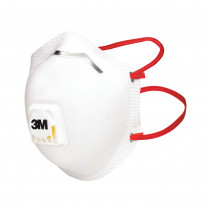
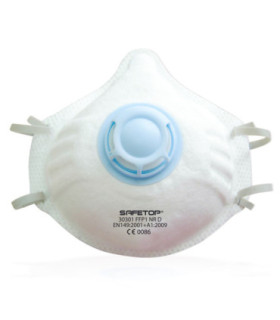
Disposable Ffp1 Nr Masks. Extra lightweight preformed mask.
Certified against dolomite dust
Wide range of security products for any type of industry and work
know us


In the industrial field, workers are frequently exposed to chronic respiratory diseases that directly affect their health, making it vital to have the correct and certified protective barrier to mitigate risks in their work environment.
Protective masks must undergo particle filtration efficiency and inward leakage tests, according to the European standard EN 149:2001+A1:2009, which establishes all technical requirements and sets the technicalities for filtering half masks, classifying them into three levels of efficiency: FFP1, FFP2, and FFP3. Understanding this hierarchy is fundamental for any safety officer.
For a mask to be marketed as PPE in the European Union, it must pass particle filtration efficiency and inward leakage tests. The term "FFP" comes from the English Filtering Face Piece (Filtering Face Piece). The fundamental difference between FFP1, FFP2, and FFP3 lies in their filtration capacity and facial fit level, which determines the degree of protection against contaminating agents.
FFP1: Basic level. They are designed to retain at least 80% of suspended particles up to 0.6 μm in size. Their use is limited to non-toxic environments, such as handling inert dust, sawdust, or construction materials that generate coarse particles without added toxicity.
FFP2: Intermediate level. They offer a minimum filtration efficiency of 94%. They are the recommended standard for industrial environments where workers are exposed to solid and liquid aerosols of low to moderate toxicity, such as welding fumes, fine hardwood dust, or certain biological agents.
FFP3: Superior level. With a minimum filtration efficiency of 99%, they represent the maximum protection offered by a half mask. They are essential in high toxicity environments, handling hazardous chemicals, asbestos, or exposure to viruses and bacteria.

The selection of respiratory protective equipment must be strictly based on the Risk Assessment of the workplace. Not all contaminants have the same nature or penetration capacity. Here we explain which masks to use, depending on the work environment.
Woodworking and construction: here, the FFP1 mask is usually insufficient due to the presence of fine dust that can cause severe irritations. The FFP2 is the minimum standard to ensure constant protection in this field.
Health sector and laboratories: in the presence of pathogens or viral agents, the FFP3 is the standard technical recommendation, as it minimizes the possibility of inhalation of contaminating microparticles almost entirely.
Welding and metallurgical manufacturing: metallic fumes present a high risk of toxicity. For this sector, an FFP2 or FFP3 is required depending on the composition of the metal being handled (especially if it contains nickel, chromium, or manganese).
Find the FFP protective mask that best suits your team here.
An FFP3 mask, no matter how high its filtration capacity, is useless if the facial fit is poor. The phenomenon of inward leakage is the main reason for the loss of effectiveness of the PPE. To prevent this, at Sekureco we recommend checking the following aspects.
Fit Test: each worker must verify the facial seal. The mask must fit perfectly to the nose bridge and chin.
Exhalation valve: Is it necessary? If the environment is not sterile, the valve significantly improves comfort by expelling hot, humid air, reducing fatigue and allowing for longer working hours without compromising the user's health.

NR Marking (Non-Reusable): designed exclusively for a single work shift (maximum 8 continuous or discontinuous hours). The vast majority of FFP1, FFP2, and FFP3 masks on the industrial market belong to this category. At the end of the workday, they lose electrostatic properties and must be disposed of.
Immediate replacement: If the mask shows physical damage, if there is an increase in breathing resistance, or if it has been in direct contact with chemical contaminants, it must be removed from service immediately.
R Marking (Reusable): these are masks that have passed additional clogging tests and can be used for more than one work shift. In these cases, it is mandatory to strictly follow the cleaning and disinfection protocols recommended by the manufacturer, ensuring that the cleaning agent does not degrade the filtering medium.
Discover the FFP1, FFP2, and FFP3 masks available at Sekureco.
Regardless of whether the shift hours have been completed, a respiratory protective mask must be removed from service and destroyed immediately under the following circumstances:
Filter saturation: a noticeable increase in breathing resistance is detected. This occurs when the pores of the filtering material become clogged with dust or particles.
Physical or structural damage: breaks in the body of the mask, severe deformations in the cup that prevent sealing, or failures in the securing straps (frayed or loose elastics).
Moisture saturation: excessive internal condensation accumulation drastically reduces filtration efficiency and creates a favorable environment for bacterial proliferation.
Direct contamination: if the mask has been in direct contact with splashes of chemicals, biological fluids, or highly toxic substances.
Incorrect storage before use is another common failure of PPE:
Environmental conditions: they must be kept in their original packaging, in dry, well-ventilated places, away from heat sources or direct sunlight, always respecting the temperature range and expiration date indicated by the manufacturer on the box.
Hygienic handling: place and remove the mask only by the elastic bands, avoiding touching the inner or outer part of the filter with dirty hands to prevent the transfer of contaminants.
In short, the correct selection of self-filtering masks FFP1, FFP2, and FFP3 under the EN 149 standard, combined with strict adherence to their lifecycle and maintenance guidelines, constitutes the cornerstone of any effective occupational risk prevention program; investing in certified equipment and ensuring timely replacement not only ensures compliance with European regulations but actively safeguards the respiratory health of the worker.
Only if it is marked as "R" (Reusable), which is uncommon for this type of PPE. For safety, the EN 149 standard recommends its use for a single work shift.
It means "Non-Reusable." It must be discarded after the workday ends or earlier if it is dirty or damaged.
FFP3 offers the greatest guarantee due to its high filtration rate, although FFP2 is also widely recognized by international organizations as an effective barrier against contaminating aerosols.
When inhaling deeply, you should notice that the mask "sucks" towards your face. If you feel air entering through the edges (especially in the nasal area), the fit is incorrect.
The valve facilitates the exit of exhaled air, preventing condensation and improving the comfort of the worker under high physical load conditions.
> CLOTHES AND COMPLEMENTS
Please sign in first.
Sign in