English GB
 Español
  Français
  Deutsch
  Italiano
  Português PT



€385.99
€385.99
(TAX incl.)
€319.00 (no TAX)
€319.00 (no TAX)
Sodium saccharin test solution produces a sweet-tasting spray.
Wide range of security products for any type of industry and work
know us


The work atmosphere can harbor invisible but highly harmful contaminants for the body. The adoption of collective measures - such as localized extraction systems or forced general ventilation - is always the first line of defense when it comes to industrial safety and occupational health. However, when these barriers prove insufficient to mitigate the risk, European regulations establish that the use of mandatory respiratory protection equipment becomes an unavoidable legal requirement for the employer and strictly mandatory for the worker.
At Sekureco, we continuously analyze the European legislative framework to provide those responsible for Occupational Risk Prevention (PRL) with the exact criteria that determine when, how, and what type of respiratory equipment to deploy based on environmental exposure.
The obligation to use respiratory protection does not arise from free will, but from a rigorous risk assessment required by key European directives, transposed into the national laws of member states.
According to Framework Directive 89/391/EEC and Directive 98/24/EC (chemical agents), respiratory PPE is considered a last resort solution. The obligation to use it arises strictly when:
Design and engineering options to reduce airborne contaminants have been exhausted.
The established environmental limit values (ELVs) for the hazardous substance are continuously or intermittently exceeded during the workday.
Emergency situations, extraordinary maintenance work, or entries into confined spaces occur where the atmosphere is unstable or unknown.
Identifying the exact moment when respiratory protection becomes mandatory requires correlating the type of contaminant with the nature of the production process.
Affected sectors: Construction, demolition, industrial carpentry, and mineral handling.
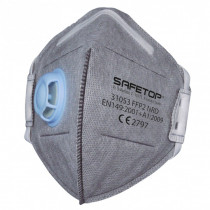
Obligation criterion: Operations such as concrete cutting, sanding of putties, or handling mineral fibers (rock wool or asbestos regulated under strict protocols) generate respirable solid particles that penetrate deeply into the lung alveoli. Self-filtering masks (FFP2 or FFP3) are mandatory as soon as the dust concentration exceeds safe daily exposure thresholds.
Affected sectors: chemical industry, industrial painting workshops, metal degreasing, and water treatment plants.
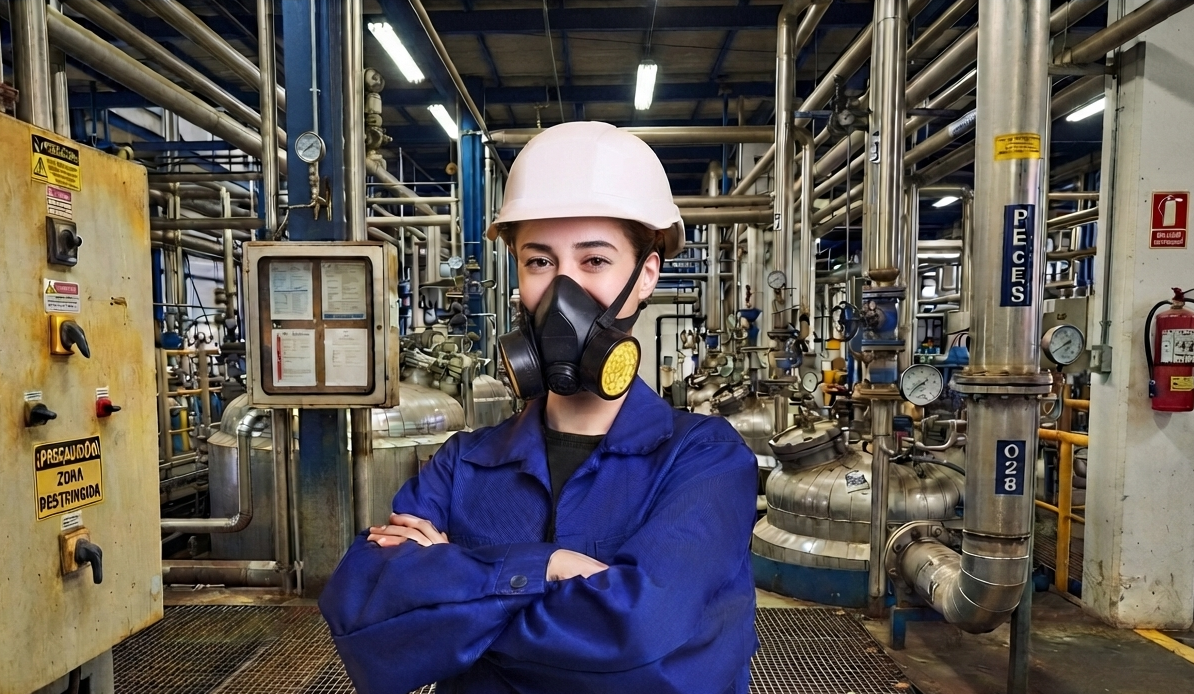
The presence of solvents, acids, or toxic gases requires the use of dual masks or half-masks equipped with specific chemical filters (types A, B, E, K). Their use is mandatory whenever the atmosphere contains gas concentrations exceeding 0.1% by volume (class 1) or when there is a risk of oxygen deficiency.
Affected sectors: research laboratories, pharmaceutical industry, biosanitary waste management, and medical emergencies.
Obligation criterion: in the presence of biological aerosols carrying risk pathogens (bacteria, viruses, or spores), the use of respiratory protection with high filtration efficiency (usually FFP3 or equivalents with P3 filters) is mandatory to prevent transmission by inhalation.

A mask or respiratory equipment only protects if it fits perfectly to the worker's facial anatomy. The presence of a beard, facial hair, or deep scars invalidates the seal, creating leaks inward. Therefore, regulations recommend conducting fit tests (Fit Test) periodically. Additionally, chemical filters have a limited shelf life that depends on environmental humidity, contaminant concentration, and the user's breathing frequency; their saturation requires immediate replacement.
Learn more about mask fit tests at Sekureco.
To comply with regulatory requirements in the most demanding environments, our catalog includes advanced solutions that combine high protection, ergonomics, and European certification:
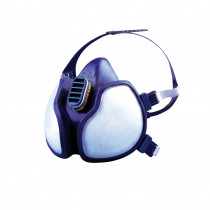
Reusable half masks with combined filters (EN 405): ideal for workers exposed continuously to paint vapors and particles in automotive or fine metalworking workshops. Their low-profile design allows for perfect visibility and compatibility with welding screens.
Motorized filtering equipment (THP/PAPR according to EN 12941): designed for environments with high contaminant loads where the worker's respiratory effort must be minimized. They provide a constant flow of filtered air through helmets or hoods, being mandatory in prolonged asbestos removal work or in complex chemical plants.
Determining when mandatory respiratory protection is required is a technical responsibility of the company that protects the long-term health of workers against invisible risks. Integrating a precise risk assessment with the selection of certified PPE under European standards ensures both legal compliance and maximum operational safety in any industrial plant.
No, due to strict legal imposition of PPE, although the employer may require it as an additional preventive measure or for comfort. Legal obligation is activated when the permitted professional exposure limits are exceeded.
In no way. Particle filters (P1, P2, P3) retain solid and liquid aerosols but are completely ineffective against chemical gases or vapors. Specific filters (A, B, E, K) or combined filters are required.
Because the theoretical filtration efficiency of a mask drastically reduces if there are gaps or spaces between the silicone/rubber edge and the user's skin. The Fit Test checks the actual seal for each worker.
FFP masks (EN 149) are complete filtering facepieces and generally single-use (NR). Half masks (EN 140) are reusable structures made of rubber or elastomer to which interchangeable filters are attached, offering greater versatility and cost-effectiveness in the industry over the long term.
Do you need expert advice to determine exposure thresholds or equip your teams with certified respiratory protection systems? Explore our specialized category on Respiratory Protection Equipment at Sekureco, where you will find everything from self-filtering masks to state-of-the-art motorized equipment.
> CLOTHES AND COMPLEMENTS
Please sign in first.
Sign in