The maintenance of Personal Protective Equipment (PPE) is as important as its proper use, and it should be included in the risk prevention plan of any industry.
A negligently stored piece of equipment undergoes an accelerated aging process that compromises its performance just when it needs to respond to an accident. In this technical article from Sekureco.eu, we analyze the physical variables that degrade your equipment and how to implement a storage protocol that ensures the safety of your workers.
For prevention managers and warehouse managers, the maintenance of PPE should be treated with the same rigor as the maintenance of heavy machinery. A strict protocol not only optimizes operational costs by extending the lifespan of the equipment but also ensures that each device meets the design standards under which it was certified.
Introduction: why poor storage nullifies the certification of PPE
When a manufacturer develops PPE and obtains its CE marking under Regulation (EU) 2016/425, it certifies that the equipment will withstand specific loads, impacts, or chemical exposures, as long as the maintenance guidelines described in its technical data sheet are followed.
If a safety harness or protective goggles are stored under direct sunlight, in humid environments, or next to corrosive chemical vapors, the materials suffer imperceptible structural alterations. In the event of an accident, if the equipment fails due to degradation from improper storage, the legal responsibility falls directly on the company for failing to ensure the proper custody and maintenance of the protective equipment. Therefore, inadequate storage nullifies the warranty of protection and the technical coverage from the manufacturer.
Technical explanation: environmental variables that destroy protective materials

The degradation of improperly stored PPE is due to well-documented physicochemical phenomena. The three most destructive environmental variables in industrial environments are as follows:
Relative humidity and fungal proliferation in safety textiles (Harnesses and footwear)
Environments with a relative humidity above 65% are the ideal scenario for the proliferation of microorganisms, mold, and fungi. Synthetic textile fibers such as polyamide and polyester (used in harnesses, positioning ropes, and energy absorbers of fall protection equipment), as well as the natural leather of safety footwear, are highly vulnerable.
Fungi secrete enzymes that microscopically break down textile filaments. This results in an invisible loss of tensile strength. In safety footwear, accumulated moisture weakens seams and rots the inner layers of leather, destroying the ergonomics and dielectric or waterproof protection of the equipment.
Extreme temperature and crystallization of elastomers in footwear and eye protection
Severe thermal fluctuations or storage near heat sources (such as boilers, engines, or the interior of vehicles exposed to the sun) irreversibly alter polymers and elastomers. High temperatures accelerate the migration of plasticizers
For example, the silicone and rubber of respiratory protection masks, the frames of safety glasses, and the polyurethane (PU) soles of footwear dry out, losing their elasticity and undergoing a process of crystallization or hydrolysis. When losing flexibility, the components crack under minimal pressure, causing cracks or the sole to detach while walking.
Light exposure: the photodegradation of synthetic fibers
Ultraviolet (UV) radiation, both from direct sunlight and certain high-intensity industrial lighting, acts as a catalyst for molecular breakage. This process is known as photodegradation. The chemical bonds of polymers such as nylon and polycarbonate absorb UV photons, fragmenting their molecular chains.
A safety harness or a textile lifeline continuously exposed to light in the warehouse will suffer discoloration (a clear symptom of degradation) and will become rigid and brittle. What a dynamic impact that a new polyamide thread would elastically absorb, in this case, would instantly break the photodegraded fiber.
When to apply each storage method for PPE on-site and during transport?
Depending on the workflow and the type of industry, two conservation methodologies should be combined to ensure the integrity of the safety equipment:
Centralized storage in ventilated lockers versus workers' lockers
-
When to apply: this is the mandatory method for reserve stock, Category III equipment (fall protection, self-contained respiratory protection), and shared specialized use equipment.
-
Why: allowing workers to store their PPE in their personal lockers often leads to poor practices: introduction of wet clothing, dirty tools that cut textiles, or lack of ventilation that concentrates bad odors and fungi. Centralized storage in cabinets or conditioned rooms ensures rigorous control of temperature, humidity, and light, in addition to facilitating periodic technical inspections.
Safe transport of critical equipment to fieldwork or external locations
-
When to apply: in maintenance contracts, work on power lines, rescue services, or outdoor assemblies where PPE must be transported daily in service vehicles.
-
Why: the transport of PPE cannot be done "in bulk" in the back of a van, mixed with sharp tools, cans of oil, or solvents. Instead, isolation protocols should be applied using rigid containers or waterproof transport bags that protect the equipment mechanically from impacts and chemically from fluid leaks from the vehicle.
Examples of products and storage solutions at Sekureco.eu
At Sekureco.eu, we understand that caring for PPE is as important as selecting it. Therefore, we incorporate specific technical solutions to organize and sanitize the equipment in your facilities.
Transport bags for height equipment and semi-static ropes
For the category of work at height, we have backpacks and transport bags made of high-tenacity PVC canvas with thermally sealed joints. These bags protect ropes, harnesses, and connectors from water, industrial dust, and UV rays during transport or temporary storage on the ground at the worksite. With waterproof closure systems, they completely isolate the textile material from any external aggressive agent.
 Check out the waterproof Irusak bag from IRUDEK
Technical safety cabinets for segregated storage of chemical PPE
For industries where corrosive substances, paints, or hydrocarbons are handled, we offer storage cabinets with passive or forced ventilation and shelves with integrated retention basins. These systems allow for the complete segregation of clean PPE (such as chemical protective suits and hermetic respiratory filters) from the areas where reactants are stored or handled, preventing cross-contamination from harmful vapors in the air.
.png)
Frequently asked questions about the correct storage of PPE
-
Is it harmful to store safety boots in the trunk of a car during summer?
-
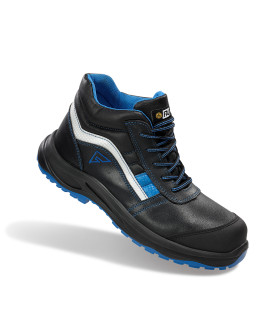
Yes, it is extremely harmful. During the summer months, the interior of a car trunk exposed to the sun can reach or even exceed 60 °C. These extreme thermal conditions accelerate the process of hydrolysis in the polyurethane (PU) soles, causing the polymer to decompose internally. When reusing the boots, the sole may crumble or completely detach within a few hours of work.
-
How should safety harnesses be hung to maintain their structural shape?
-
Safety harnesses should never be stored rolled up or piled in boxes. They should be hung vertically from their D-ring on blunt (not sharp) hooks in a dry, cool, and dark place. Storing them stretched prevents the creation of permanent folds in the polyamide straps, which could weaken the supporting fibers, and allows the sweat accumulated during the day to evaporate properly.
-
What cleaning products are allowed to sanitize a polycarbonate visor EN 166?
-
Only warm water and a mild neutral soap should be used, drying the surface with a clean microfiber cloth that does not shed fibers. Alcohols, industrial solvents, conventional glass cleaners, or rigid cellulose paper are completely prohibited. These products destroy the delicate chemical layers of the anti-fog and anti-scratch treatments of polycarbonate, clouding the visor and nullifying its certification for ocular resistance.
Design your technical conservation space with Sekureco.eu
Do you need to adapt your warehouse to meet the conservation requirements of European regulations? Do you want to equip your teams with transport solutions that extend the lifespan of their Category III equipment? At Sekureco.eu, we advise you on configuring industrial storage systems tailored to the real needs of your sector.
Contact us to speak with our consulting team to optimize the lifecycle management of your PPE.
 English GB
 Español
  Français
  Deutsch
  Italiano
  Português PT