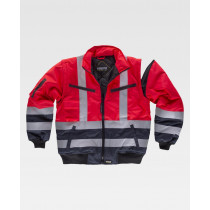
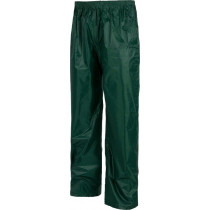
Working in environments exposed to extreme low temperatures – such as industrial cold rooms, outdoor logistics operations during winter or high-altitude wind energy installations – represents a critical challenge to worker health and productivity. Prolonged exposure to cold without appropriate personal protective equipment (PPE) not only diminishes physical performance and manual dexterity, but drastically increases the risk of hypothermia, frostbite and work-related accidents resulting from loss of sensation.
To ensure effective protection, occupational health and safety managers and procurement heads must understand that clothing selection, as thermal work wear for cold is not based solely on "providing more warmth", but rather on applying a scientifically designed layering system backed by the strict European standard EN 342. Discover the variety of cold protection garments available in our specialised category.
WORK WEAR FOR EXTREME COLD: THE THREE-LAYER PRINCIPLE
In the occupational protection industry, efficient thermal insulation is governed by the principle of layering or stratification of technical fabrics. No single garment can simultaneously manage insulation, breathability and protection against atmospheric elements.
Layer 1: Base or thermal layer (moisture management)
-
Primary function: keep skin dry. When a worker exerts physical effort, the body generates sweat. If this remains in contact with the skin, it cools rapidly (condensation effect), accelerating hypothermia.
-
Recommended materials: 100% cotton fibres should be avoided (as they retain moisture). Technical synthetics (high-quality polyester, polypropylene) or technical merino wool are prioritised, offering natural water-repellent and antibacterial properties.
Layer 2: Intermediate or insulation layer (heat retention)
-
Primary function: create an airtight chamber that retains body heat generated by the organism, whilst allowing water vapour to escape to the outside.
-
Recommended materials: technical fleece linings, lightweight padded jackets with hollow-fibre or high-density synthetic down fillings that maintain their thermal properties even in moderate humidity conditions.
Layer 3: Outer or protection layer (shield against wind and moisture)
-
Primary function: protect the worker against external agents such as wind (wind chill factor), snow, rain and mechanical abrasion.
-
Key standard: must carry EN 342 certification (cold protection) and, depending on the environment, be combined with EN 343 (rain protection) and EN ISO 20471 (high visibility if working on traffic routes or night-time logistics).
THE EN 342 STANDARD: WHAT DOES COLD PROTECTION CLOTHING EVALUATE?
The European standard EN 342 specifies the requirements and test methods for clothing items and clothing sets (jackets, trousers, one-piece suits) designed to protect the body in cold environments characterised by temperatures below -5 °C.
To correctly interpret the technical datasheet of a PPE under EN 342, we must analyse the following parameters represented in the normative pictogram:
-
Resulting thermal insulation (Iclr or Icle): measured in square metres kelvin per watt (m2K/W). Indicates the garment's ability to retain heat. The higher this value, the higher the level of thermal protection.
-
Air permeability (Class 1 to 3): measures the fabric's resistance to wind passage. Class 3 offers maximum resistance to icy air currents, preventing collapse of the inner thermal chamber.
-
Water vapour resistance (optional): evaluates the garment's breathability to avoid thermal stress from sweat accumulation during high physical demand tasks.
Calculation of exposure time
The required thermal insulation depends directly on ambient temperature, wind speed and level of physical activity (worker metabolism). Excessive insulation during heavy tasks can cause excessive sweating and accelerated subsequent cooling.
CRITICAL COMPLEMENTARY ELEMENTS IN WORK WEAR FOR EXTREME COLD
A certified thermal jacket or pair of trousers is not sufficient if extremities and junction areas remain exposed. The integrated protection system must be complemented with:
-
Upper extremity protection: certified thermal gloves (EN 511 standard for convective and contact cold), designed to maintain flexibility and prevent loss of manual dexterity when handling loads or tools.
-
Lower extremity and footwear protection: safety boots with cold-insulating soles (CI marking per EN ISO 20345), combined with technical thermal socks that prevent excessive compression of blood flow to the toes.
-
Head and neck protection: thermal balaclavas or under-helmet caps compatible with safety helmets (EN 397), as a significant portion of body heat is dissipated through the head region.
QUICK SELECTION GUIDE: TYPE OF PROTECTION CLOTHING BY WORK SCENARIO
|
Environment / work sector
|
Level of thermal exposure
|
Recommended PPE and standard
|
|
Storage cold rooms
|
Moderate to severe (-15°C to -25°C)
|
Integrated thermal overalls or jacket and bib sets with EN 342 certification (high air resistance).
|
|
Outdoor logistics / winter construction
|
Variable (wind, humidity and weathering)
|
Waterproof thermal jackets two-layer or three-layer with EN 342 insulation and high visibility EN ISO 20471.
|
|
Maintenance of high-altitude installations
|
Extreme (below -30°C with wind)
|
Multi-layer expedition technical clothing, EN 511 balaclavas and safety footwear with reinforced CI insulation.
|
1. Temperature and wind measurement: Step 1 - Thermal risk analysis.
Assess the actual temperature of the workplace and wind speed to determine the thermal insulation (Icl) required per EN 342.
2. Correct textile integration: Step 2 - Multi-layer system selection.
Ensure you combine a breathable base layer, an insulating intermediate layer and an approved wind-resistant outer layer.
3. CE marking inspection: Step 3 - Certification verification.
Check that garments bear the EN 342 pictogram and the manufacturer's conformity documentation for Category II or III PPE.
CERTIFIED EQUIPMENT FOR EXTREME COLD AT SEKURECO
At Sekureco.eu we have an exhaustive catalogue of winter work clothing solutions, featuring winter work jackets, sweatshirts and jumpers, thermal trousers and more, all designed to rigorous European standards to protect professionals in the most extreme cold environments.
Explore our specialised Work Clothes for Cold catalogue and equip your team with maximum technical guarantee and regulatory compliance.
 English GB
 Español
 Français
 Deutsch
 Italiano
 Português PT