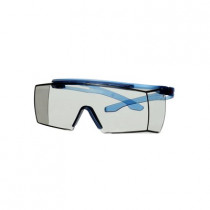
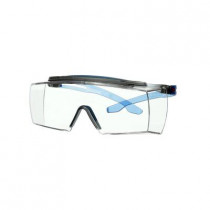
"If I wear a face shield, I no longer need safety glasses underneath" is one of the most widespread misconceptions in eye and face protection, and it can leave the worker exposed right where they think they are most protected. Safety glasses and face shields are not two versions of the same product or interchangeable options: they protect different areas of the body against different risks, and in many cases, both are needed at the same time.
In this article, we explain what each piece of equipment really protects, what standard regulates them, and how to choose correctly according to the risk of your job, to avoid the most common mistake: thinking that a face shield replaces safety glasses.
SAFETY GLASSES AND FACE SHIELDS: WHAT THEY REALLY PROTECT
Safety glasses: point protection for the eyes
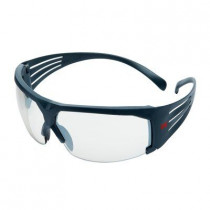
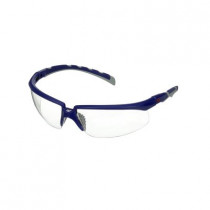
Safety glasses are regulated by the EN 166 standard and specifically designed to protect the eyes from impacts from particles, splashes, and UV radiation. Their snug fit to the face, with optical classes (1, 2, or 3) and impact resistance levels (S, F, B, A), makes them the reference protection when the risk is limited to the ocular area.
What safety glasses do not cover: the forehead, cheeks, chin, or neck. In the event of splashes from liquids, molten metal, or electrical arc risk, exposure of these areas can be as dangerous as that of the eyes themselves.
Face shields: protection for the entire face
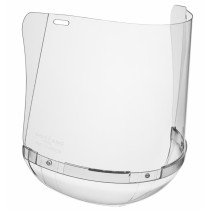
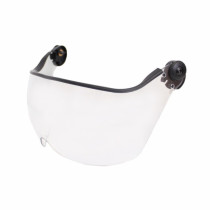
Face shields cover the entire face, from the forehead to the chin, using a visor made of polycarbonate, acetate, or metal mesh secured with a head harness. In addition to EN 166, some face shields meet additional standards depending on the specific risk: EN 1731 regulates mesh visors (common in forestry work), and there are certified models for electrical arc risk under specific regulations such as GS-ET-29.
What many face shields do not guarantee on their own: a perimeter seal adjusted to the eyes. Since they are not snugly fitted to the face like glasses, they can allow the entry of fine particles or splashes from the sides, especially during sudden head movements.
CAN YOU USE ONLY A FACE SHIELD, WITHOUT GLASSES UNDERNEATH?
In most environments with a real risk to the eyes, it is not sufficient to use only the face shield. The usual technical recommendation is to combine both pieces of equipment: EN 166 safety glasses as direct eye protection, and the face shield as an additional barrier for the rest of the face. This is especially relevant in welding, work with molten metal, handling chemicals, or electrical arc risk, where a lateral projection can bypass the shield and reach the eye if there are no safety glasses underneath.
See our featured product: TURBOSHIELD SAFETOP splash and UV protection face shield

The face shield, therefore, should be understood as a complement to eye protection, not as a substitute, except in models specifically certified and designed to provide complete eye sealing on their own (less common and more specific in use).
WHEN TO USE EACH PIECE OF EQUIPMENT
Safety glasses
- Machining, cutting, and drilling work, with a risk of particle projection.
- Handling chemicals with limited and point splash risk.
- Exposure to UV radiation or intense light outdoors.
- Oxy-fuel welding, with welding glasses of a specific shade according to the intensity of the radiation.
- Any task where the risk is concentrated specifically in the ocular area, without affecting the rest of the face.
Face shields
- Electric welding and metal cutting, where the risk of molten metal splash affects the entire face.
- Forestry work with chainsaws or brush cutters, with EN 1731 mesh visor that combines impact protection and ventilation.
- Handling chemicals with a wide splash risk, not just point.
- Work with electrical arc risk, where a shield certified specifically for that risk is required.
- Industrial maintenance tasks combined with hearing protection, using face shield kits with a harness compatible with earmuffs.
PRODUCT EXAMPLES
At Sekureco, you will find both complete categories, as well as their spare parts:
- Safety glasses: panoramic models, welding glasses with different filter shades, and prescription glasses, from brands like 3M, Honeywell, Cofan, Climax, and Safetop.
See product: SAFETOP welding glasses with round lenses Oxy-fuel Soplet

- Face shields: polycarbonate and acetate visors for general use, EN 1731 mesh visors for forestry work, and certified models for electrical arc risk such as the Portwest PS90.
See product family: Face shields
- Combined facial and hearing protection kits: head harness compatible with face shield and earmuffs, ideal for tasks that require both protections at the same time.
- Spare parts for face shields: replacement visors, spare head harnesses, and adjustment accessories, to extend the life of your equipment without having to replace it completely.
See all spare parts for face shields
FREQUENTLY ASKED QUESTIONS
Does the face shield replace safety glasses?
In most cases, no. It is recommended to combine both, as the face shield does not always guarantee a complete perimeter seal around the eyes against fine particles or lateral splashes.
What standard regulates face shields?
The basis is EN 166, the same as for safety glasses, although depending on the type of shield, additional standards such as EN 1731 for mesh visors or specific regulations for electrical arc protection may apply.
Can I use any face shield for welding?
No. Welding requires shields with a filter of the appropriate shade for the intensity of the radiation generated, similar to the criteria applied in welding glasses, and not all face shield visors incorporate this type of filter.
How often should the visor of a face shield be changed?
It should be replaced at any sign of scratching, opacity, or damage that affects vision, or following the replacement interval indicated by the manufacturer; that’s why it’s advisable to have the corresponding spare parts on hand.
Do mesh visors protect the same as polycarbonate ones?
Not exactly: mesh visors offer good ventilation and protection against impacts from large particles (like in forestry work), but do not protect against liquid splashes as a closed polycarbonate or acetate visor does.
CHOOSE THE RIGHT COMBINATION FOR YOUR RISK LEVEL
Do not leave the eye and face protection of your equipment to an incomplete choice. At Sekureco, you will find safety glasses, face shields, and all their spare parts, ready to be combined according to the real risk of each task.
Check our categories of safety glasses and face shields and equip your team with the complete eye and face protection that their work requires.
 English GB
 Español
  Français
  Deutsch
  Italiano
  Português PT