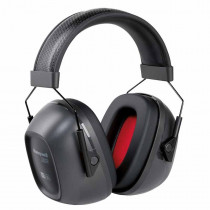
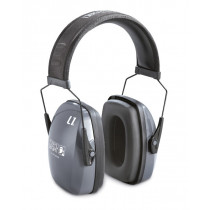
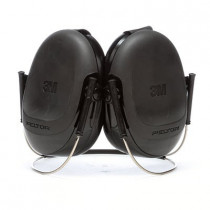
Buying the hearing protector with the highest SNR in the catalog is not always the best decision. In fact, excessive attenuation isolates the worker from alarms, verbal warnings, or the noise of the machinery itself, which is counterproductive in work environments. This could lead to a rejection of using PPE and, in turn, new safety risks.
Choosing the right hearing protection is not simply "the more, the better," but rather adjusting the level of attenuation to the actual noise of the workplace.
In this article, we answer two questions that are always linked: when is it mandatory to use hearing protection according to Spanish regulations, and what exactly does the SNR that appears on the technical data sheet of any earmuff or plug mean, so you can choose with technical criteria and not just by the highest number.
Take a look at our collection of hearing protectors.
WHEN IS IT MANDATORY TO USE HEARING PROTECTION?
The three thresholds of RD 286/2006
The reference Spanish regulation is the Royal Decree 286/2006, on the protection of the health and safety of workers against risks derived from exposure to noise. It establishes three levels of action, measured as daily equivalent level LAeq,d:
- 80 dB(A) - lower exposure value: the company must inform workers of the risk and provide hearing protectors. Use is not yet mandatory, but it is recommended.
- 85 dB(A) - upper exposure value: from this level, the use of hearing protection becomes mandatory, and affected areas must be signposted and periodic hearing medical checks established.
- 87 dB(A) - exposure limit value: this level must not be exceeded under any circumstances, taking into account the actual attenuation provided by the hearing protector used. Exceeding it constitutes a serious violation of prevention regulations.
The risk of overprotection
A common mistake is to assume that if the noise is dangerous, the more attenuation, the better. The regulation itself and the technical guides from INSST recommend that the noise level perceived by the worker under the protector be between 65 and 80 dB(A). Below that range, excessive isolation can prevent hearing alarm signals, verbal instructions, or moving vehicles, generating a different risk than the one intended to be avoided. This makes choosing the appropriate SNR a decision as technical as the very obligation to use it.
WHAT DOES THE SNR MEAN IN HEARING PROTECTION?
How real attenuation is calculated
The SNR (Single Number Rating) is the unique value, expressed in decibels, that summarizes the attenuation capacity of a hearing protector under standardized testing conditions according to the EN 352 standard. It is the data that most quickly allows for comparison between protectors, but it is not the only one: along with the SNR, the values H, M, and L usually appear, indicating specific attenuation at high (H), medium (M), and low (L) frequencies.
This distinction matters because not all industrial noises have the same frequency profile: the noise from a grinder does not behave the same as that from a diesel engine or an industrial press. For a quick estimate, the SNR is subtracted from the measured ambient noise level; for a more precise estimate according to the dominant noise type, the HML method is used, comparing the H, M, and L values with the actual frequency profile of the workplace.
How to choose the right SNR without overprotecting
The correct selection does not consist of looking for the highest available SNR, but rather calculating the necessary attenuation so that the perceived noise remains within the recommended range of 65-80 dB(A). For example, in an environment with 95 dB(A) of ambient noise, a protector with SNR 30 would leave the worker with around 65 dB(A) perceived - within the optimal range - while a protector with SNR 37 could create excessive and unnecessary isolation for that same position.
IN WHICH INDUSTRIES OR JOBS IS SNR HEARING PROTECTION NECESSARY?
The noise level, and therefore the recommended SNR, varies greatly by sector. As a reference to adjust the choice to the actual position, without falling into overprotection:
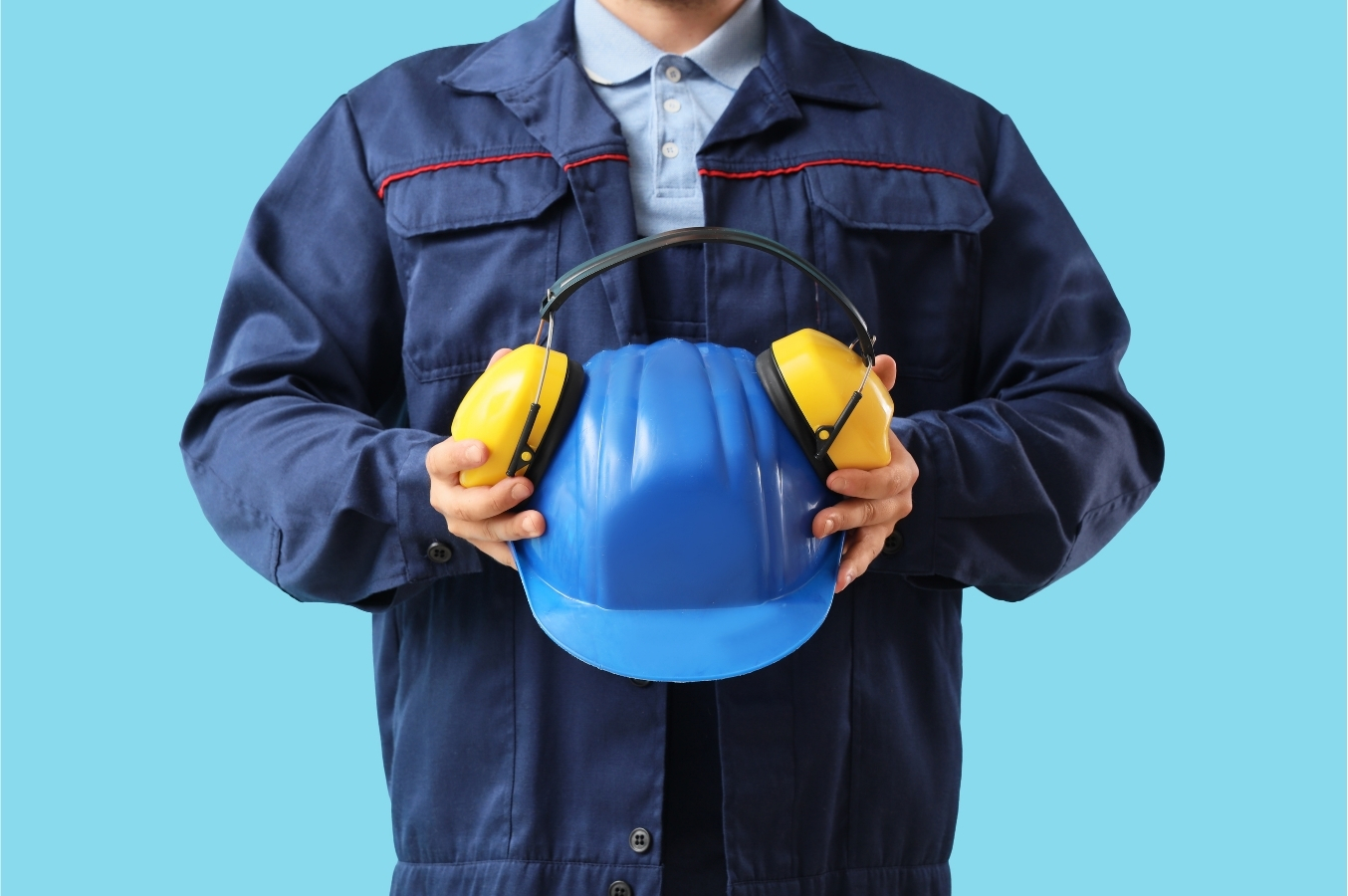
Construction and civil works (jackhammers, grinders, compressors): typical noise between 90 and 105 dB(A); SNR around 25-30 dB is recommended.
Metallurgy, foundry, and stamping (presses, punching machines, forging): levels of 95 to 110 dB(A), often with impact peaks; an SNR of 30-35 dB or double protection (earmuffs + plugs) is advisable in the most critical positions.
Carpentry and wood industry (circular saws, planers, sanders): between 85 and 100 dB(A); an SNR of 25-30 dB is usually sufficient without excessively isolating the operator from the machinery.
Mining, quarries, and blasting (drills, crushers): levels of 100 to 115 dB(A), among the highest in industrial environments; requires high SNR (30-37 dB) and, in blasting areas, reinforced protection.
Agriculture and forestry work (tractors, chainsaws, brush cutters): variable noise between 85 and 100 dB(A); earmuffs with SNR 25-30 dB are usually adequate, also prioritizing comfort during long shifts.
Airports and aircraft maintenance platforms (engines on test, ramp equipment): levels that can exceed 120 dB(A) near reactors; require very high attenuation protection and, in many cases, certified double hearing protection for that specific level.
Recycling and waste management plants (shredders, compactors): constant noise of 90 to 105 dB(A), often combined with exposure to dust, which also conditions the choice of a protector compatible with masks or glasses.
HEARING PROTECTION SOLUTIONS AT SEKURECO
In our category of Hearing Protectors at Sekureco.eu you will find:
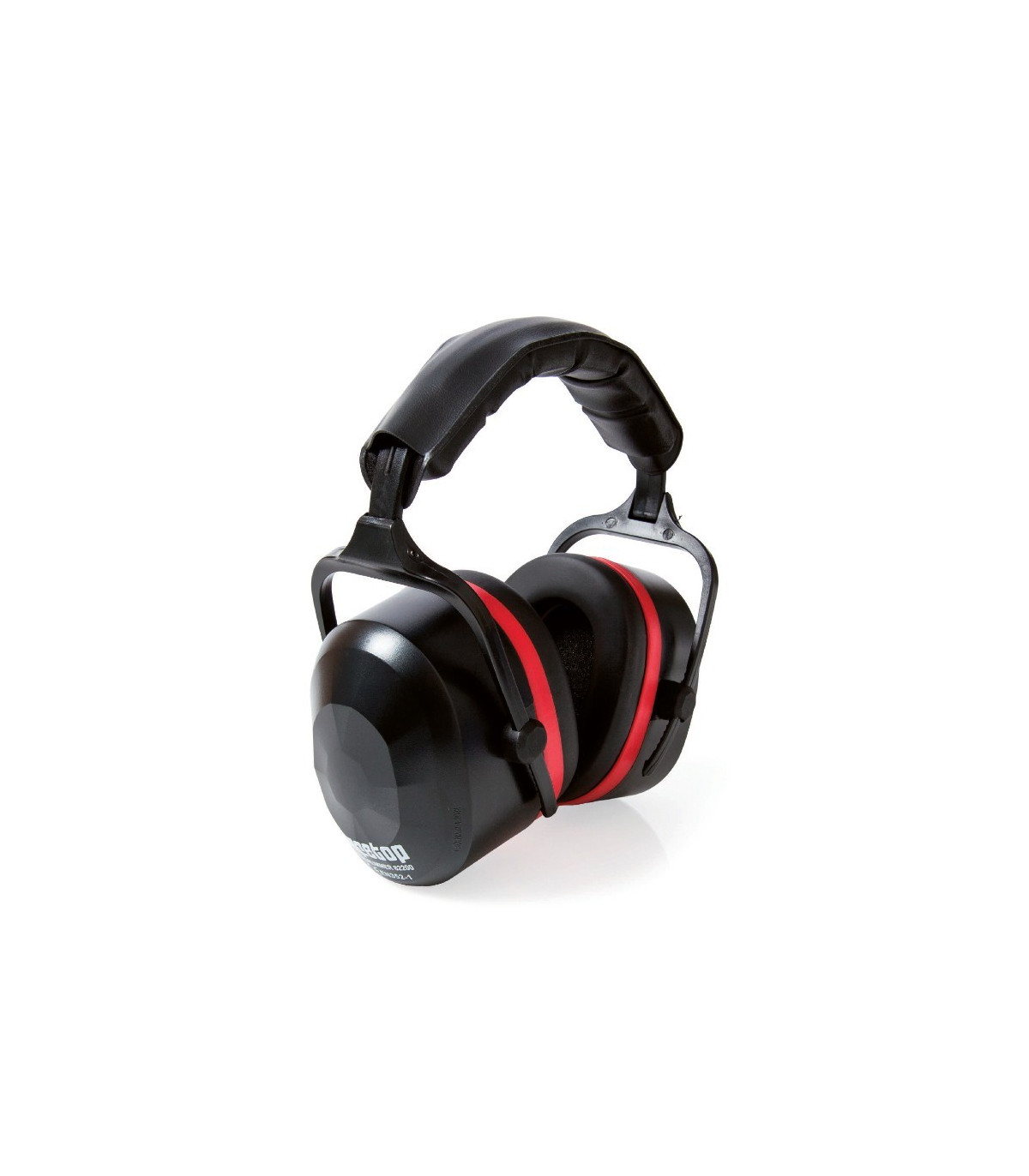
- High attenuation earmuffs such as the Big Drummer (SNR 34 dB) or the 3M PELTOR X5P5E (up to 37 dB), for high noise environments.
View product:Hearing protectors SNR 34dB SAFETOP Big Drummer
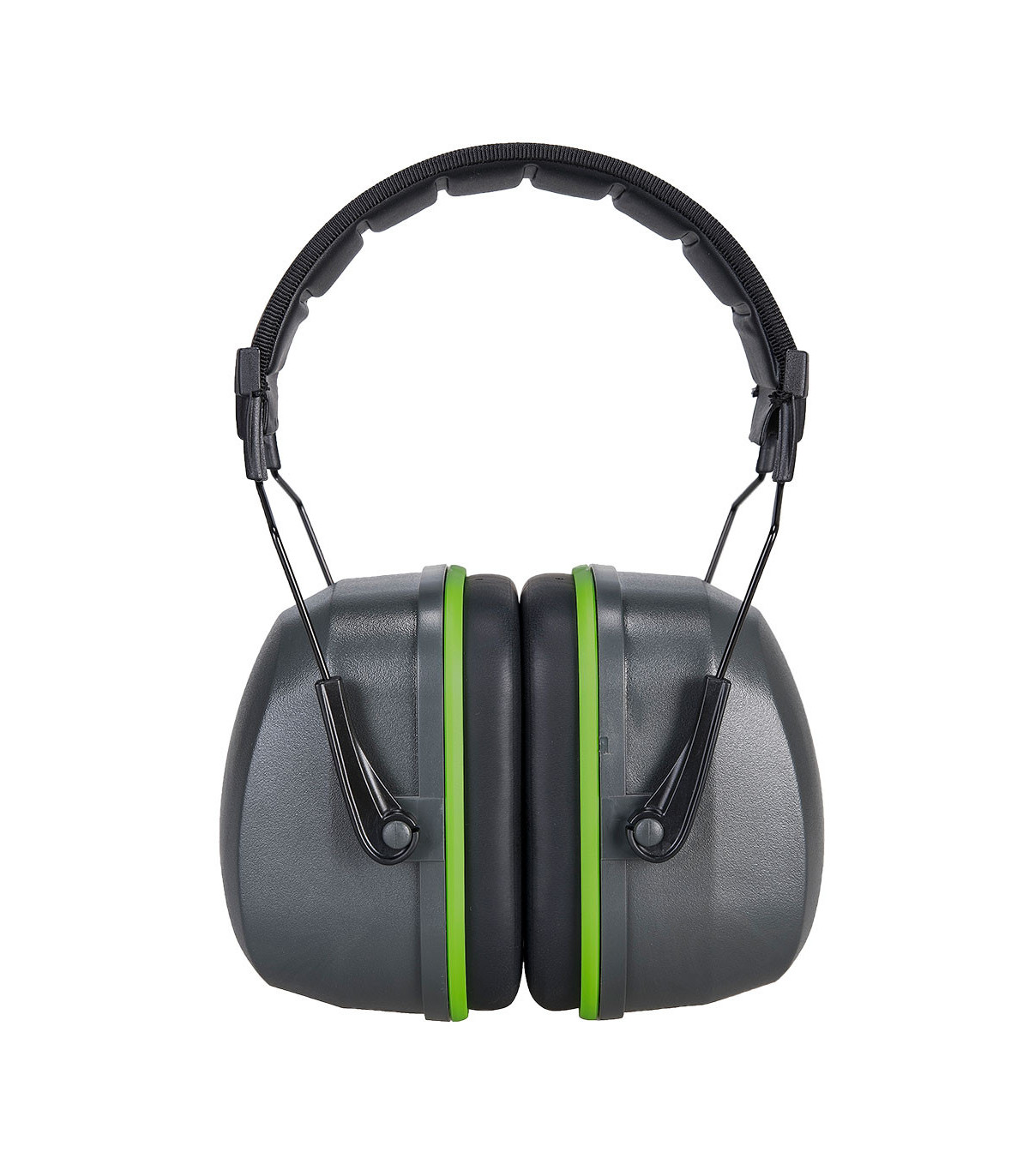
- Helmet-mounted earmuffs such as the Portwest PS46 (SNR 34 dB) or the Howard Leight VeriShield VS130 (SNR 34 dB), compatible with the simultaneous use of a safety helmet.
View featured product:Premium hearing protector SNR 34dB PORTWEST PS46
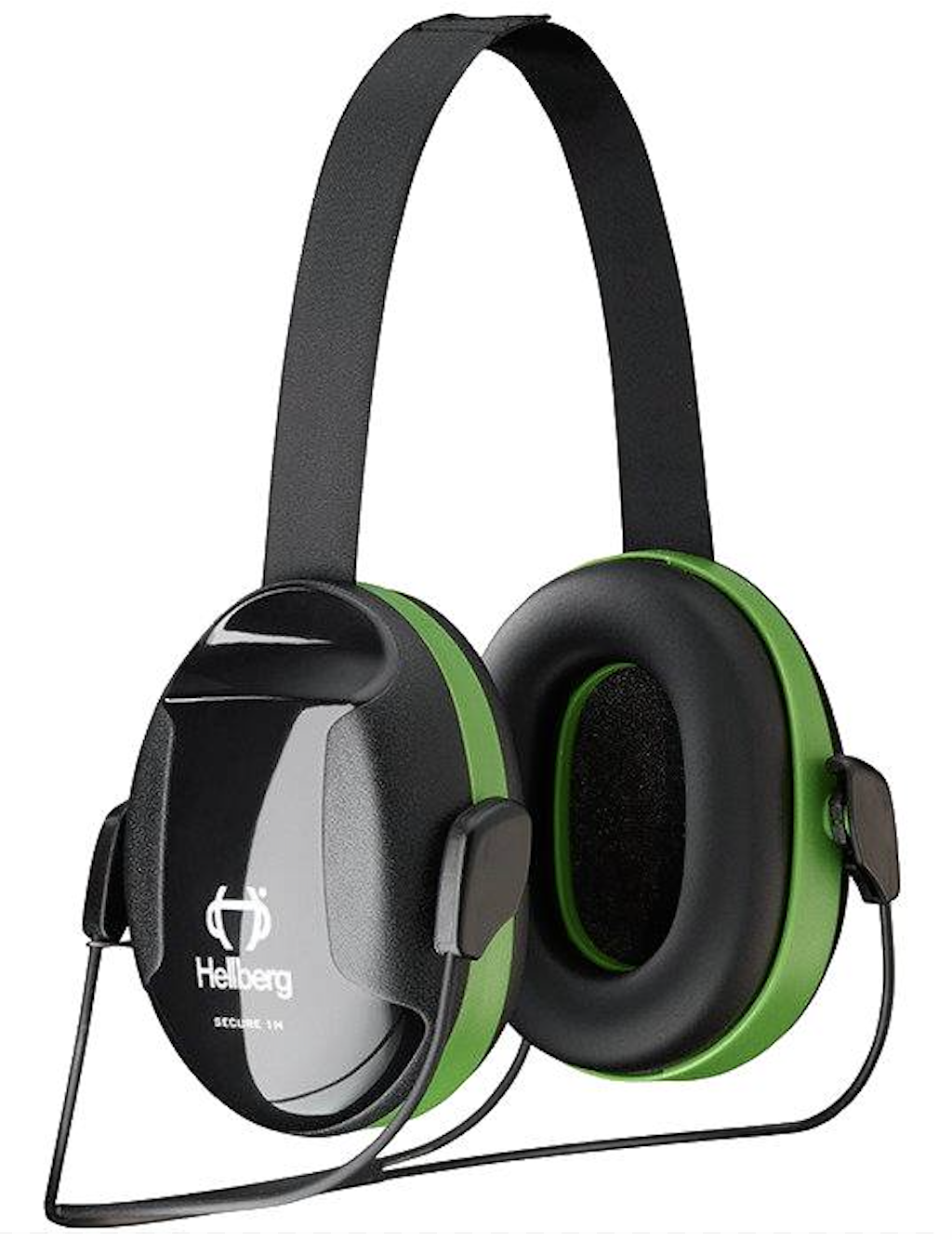
- Neckband earmuffs such as the IRUDEK Secure Neckband (SNR 26 dB), recommended for low-medium noise.
View product here
- Disposable plugs such as the 3M 1110 (SNR 37 dB), made of polyurethane foam, in box formats for daily use.
View product details: Disposable earplugs 1110 with cords 37 dB SNR 3M

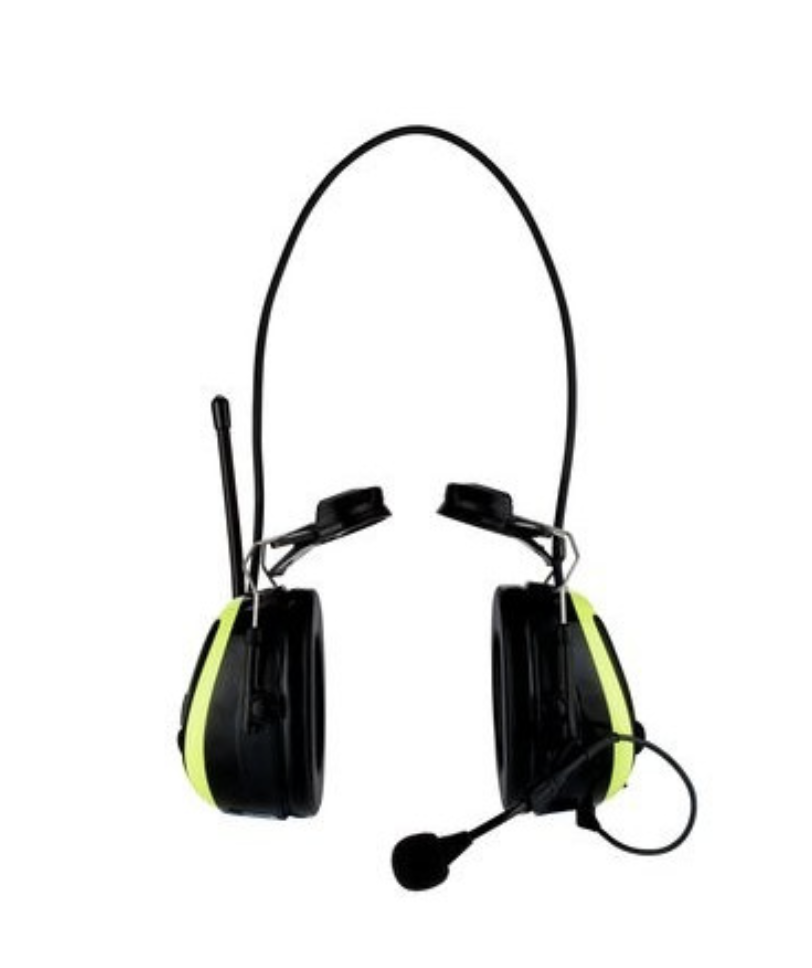
- Electronic protectors with Bluetooth, such as the 3M PELTOR WS Alert range, which combine certified attenuation with wireless communication.
View product: Helmet-mounted earmuffs WS ALERT XPI 30dB Bluetooth MultiPoint 3M
- Hygiene kits and replacement accessories, to maintain the sealing effectiveness of your reusable earmuffs over time.
FREQUENTLY ASKED QUESTIONS
At what decibel level is hearing protection mandatory?
The mandatory use is activated from 85 dB(A) of daily equivalent level, according to RD 286/2006. Between 80 and 85 dB(A), the company must provide protectors, although use is still recommended, not mandatory.
What does the SNR of a hearing protector mean?
It is the unique value in decibels that indicates the average attenuation of the protector according to standardized testing EN 352, and allows for quick comparison of different models.
Is it better to always choose the highest SNR available?
Not necessarily. An excessive SNR for the actual noise level of the position can create unnecessary isolation, making communication and perception of alarms difficult, which can lead the worker to use the protector incorrectly or incompletely.
What is the difference between SNR and the values H, M, and L?
The SNR is a general and quick estimate; the H, M, and L values allow for a more precise calculation according to the specific frequency profile of the noise in each workplace.
Can I combine earmuffs and plugs for greater protection?
In extreme noise environments, double protection may be recommended, but it must be calculated with technical criteria: simply adding the SNR of both devices together is not correct, and a poorly calculated combination can lead to unnecessary overprotection.
CHOOSE YOUR HEARING PROTECTION WITH TECHNICAL CRITERIA, NOT JUST BY THE HIGHEST SNR
The appropriate hearing protection is not the one that attenuates the most, but the one that best fits the actual noise of your workplace. At Sekureco, you will find earmuffs, plugs, and electronic protectors with SNR certified according to EN 352, ready to help you comply with RD 286/2006 without falling into overprotection.
Check out our complete category of Hearing Protectors and choose the appropriate level of attenuation for each position in your team.
 English GB
 Español
  Français
  Deutsch
  Italiano
  Português PT