 English GB
 Español
  Français
  Deutsch
  Italiano
  Português PT




ABEK filters: their colour according to standard EN 14387

Seeing the letters "ABEK" on a respiratory protection filter without knowing exactly what each one protects is more common than it seems, and can lead to the purchase of a filter that does not cover the actual contaminant at the workplace. ABEK is not a single type of filter, but the combination of four different types regulated by the standard EN 14387, each identified by a colour and designed for a specific group of gases or vapours.
In this article we explain what each letter means, which colour corresponds to it, and how they combine with capacity classes (1, 2 and 3) and with particulate filters to form a complete respiratory protection equipment.
ABEK: ONE CODE, 4 TYPES OF GAS
A - Brown
Protects against organic gases and vapours with a boiling point above 65°C, such as solvents and hydrocarbons commonly found in painting, coating and industrial cleaning with organic products.
B - Grey
Protects against inorganic gases and vapours (except carbon monoxide), such as chlorine or hydrogen cyanide, present in specific chemical and industrial processes.
E - Yellow
Protects against acidic gases, such as sulphur dioxide or hydrogen chloride, commonly found in galvanising processes, water treatment or the chemical industry.
K - Green
Protects against ammonia and its organic derivatives, present in industrial refrigeration installations, farms and some cleaning processes.
A filter marked as "ABEK" combines all four filtration capabilities in a single unit, useful when the work environment presents several of these contaminants at the same time, although it is always advisable to confirm with the technical data sheet that the filter specifically covers the gases present at your workplace.
BEYOND ABEK: OTHER FILTER TYPES IN EN 14387
AX and SX: filters for specific use
- AX (brown) — organic gases and vapours with a boiling point below 65°C (highly volatile solvents). Unlike A, B, E and K, it is single use: it must be disposed of after each shift, without exception.
- SX (violet and white) — filters for a specific chemical substance, marked with the exact name of the compound and the maximum supported concentration.
Hg-P3 and NO-P3: special filters
- Hg-P3 (red and white) — specific for mercury, with a maximum usage duration set at 50 hours, obligatorily indicated on the filter itself.
- NO-P3 (blue and white) — specific for nitrogen oxides (NO, NO2, NOx), also single use.
CLASSES 1, 2 AND 3: FILTRATION CAPACITY
In addition to the letter and colour, each gas filter carries a class number that indicates its absorption capacity, not its protection level:
- Class 1 - low capacity, for gas concentrations below 1,000 ppm.
- Class 2 - medium capacity, up to 5,000 ppm.
- Class 3 - high capacity, up to 10,000 ppm.
All three classes retain the contaminant with equal efficiency; what changes is how long they are able to do so before becoming saturated. AX, SX, NO-P3 and Hg-P3 filters are not classified in this system, as their duration is established differently according to their specific use.
COMBINED FILTERS: GASES + PARTICULATES
It is common to find filters that combine a gas code (for example, A2 or ABEK1) with particulate protection, adding the letter P and its corresponding class (P1, P2 or P3) according to standard EN 143. An A2B2E2K1-P3 filter, for example, protects against all four ABEK gas groups with different capacities, as well as against particulates of the highest class. These combined filters must simultaneously comply with the requirements of EN 14387 (gas section) and EN 143 (particulate section).
WHEN TO USE EACH TYPE OF FILTER?
- Painting, coating and organic solvents: type A filter.
- Processes with chlorine or hydrogen cyanide: type B filter.
- Galvanising, water treatment, chemical industry with acidic gases: type E filter.
- Industrial refrigeration installations and ammonia: type K filter.
- Highly volatile solvents for single use per shift: type AX filter.
- Exposure to mercury or nitrogen oxides: specific Hg-P3 or NO-P3 filters.
- Environments with multiple gaseous contaminants at the same time: ABEK combined filter, always verifying exact coverage with the manufacturer's technical data sheet.
SOLUTIONS AND PRODUCT EXAMPLES AT SEKURECO
In our Respiratory Protection Filters category on Sekureco.eu you will find:
- Type A, B, E and K filters separately, in classes 1, 2 and 3 depending on the expected contaminant concentration.
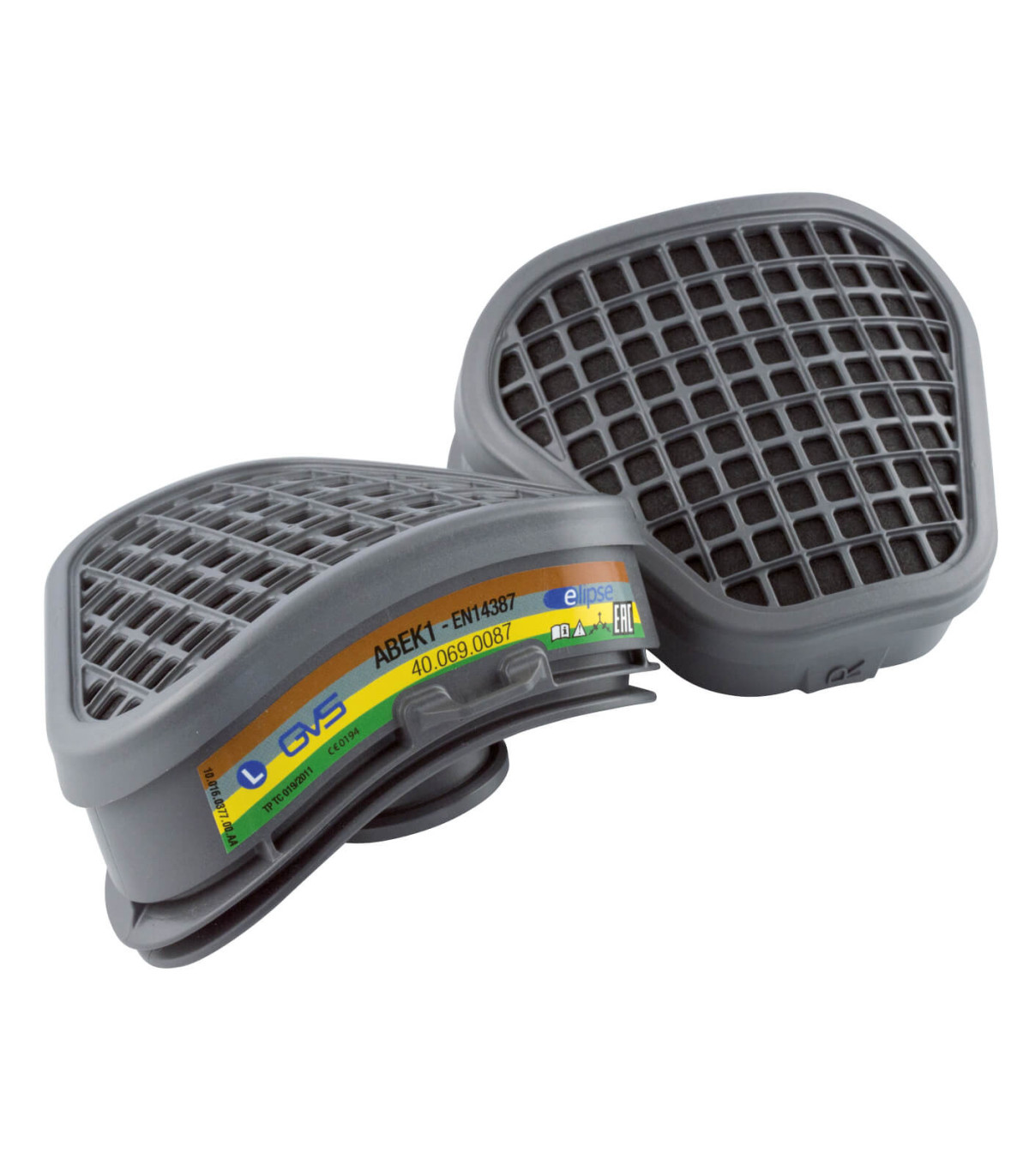
- Combined ABEK1, ABEK2 and ABEK1-P3 filters, for environments with multiple gases and the need for additional particulate protection.
- AX single-use filters, for highly volatile organic solvents.
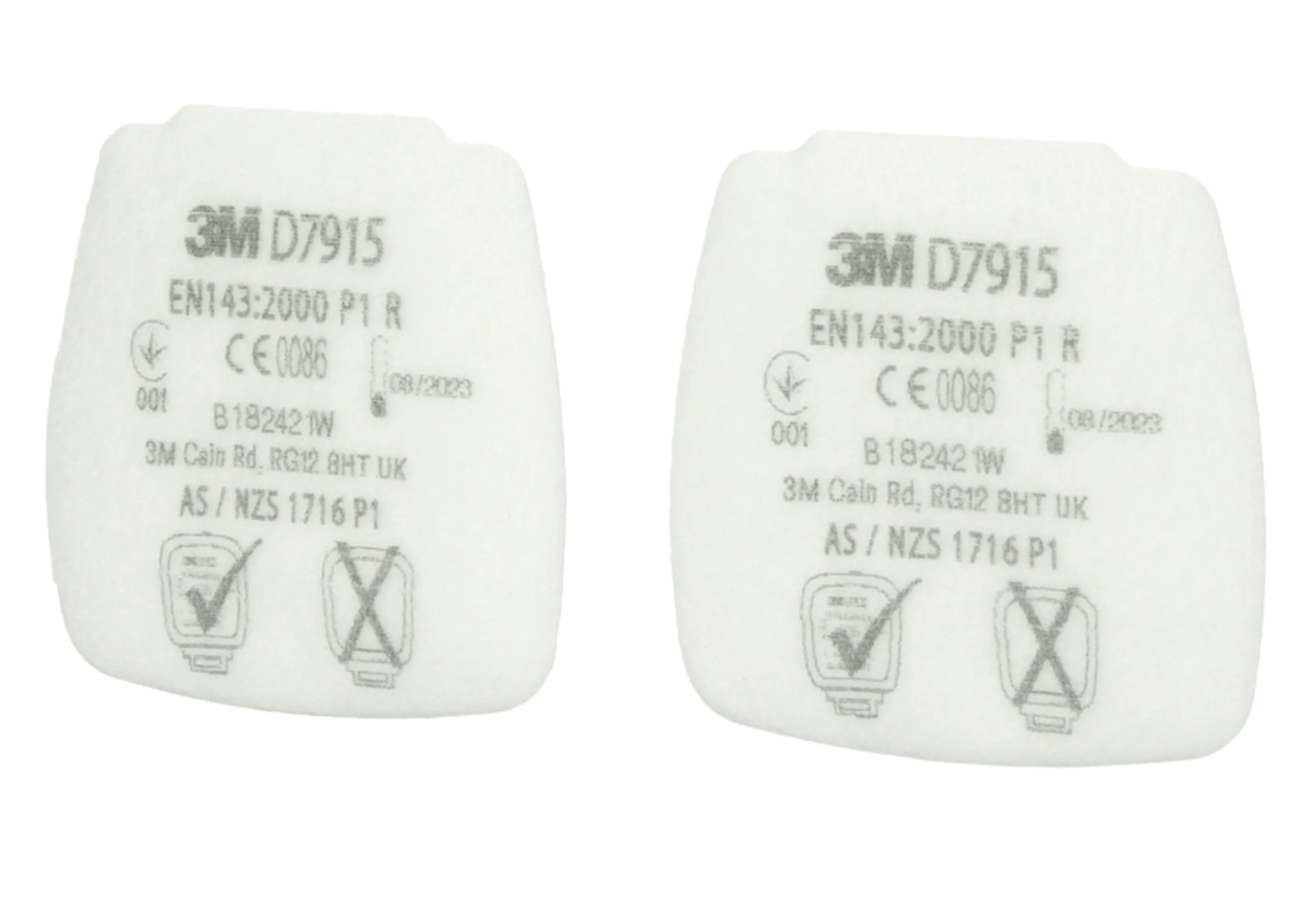
- Particulate filters P1, P2 and P3, to be combined as needed with any gas filter in this range.
See featured product: ABEK1 filters for combined gas masks SAFETOP
See featured product: P1 particulate filter R 3M Secure Click D7915
FREQUENTLY ASKED QUESTIONS
1. What is the difference between an A filter and an AX filter?
The A filter protects against organic vapours with a boiling point above 65°C and is reusable during its working life; the AX filter protects against more volatile vapours (boiling point below 65°C) and must be disposed of after each shift.
2. Does an ABEK filter protect against any gas?
No. It only protects against the four specific groups represented by its letters (organic, inorganic, acidic and ammonia); a contaminant outside these groups, such as carbon monoxide, requires a different specific filter.
3. What does the number next to the letter mean, for example A2?
It indicates the filtration capacity class (1, 2 or 3), related to the maximum gas concentration for which the filter is designed, not a higher or lower protection level in terms of retention efficiency.
4. Can I use a particulate filter only if the risk is from gases?
No. A particulate filter (P1, P2, P3) does not retain gases or vapours; if the risk is from gases, you need a type A, B, E, K or combined filter depending on the specific contaminant.
5. How do I know which type of filter I need for my workplace?
It should be determined from the chemical safety data sheet of the substances present at the workplace, checking it against the EN 14387 filter types table; if in doubt, consult your company's occupational health and safety service.
CHOOSE THE RIGHT FILTER FOR YOUR CONTAMINANT
A poorly chosen filter does not protect, even if it appears to be working correctly. At Sekureco you will find all types of filters in the EN 14387 family — A, B, E, K, AX and combined — identified by colour and class so you can choose exactly the one your workplace needs.
Check our complete category of Respiratory Protection Filters and always verify the exact coverage of the filter against the actual contaminant in your work environment.