In the design of any safety plan for working at height, there is a golden rule: a single PPE does not save lives if it is not part of an approved and compatible integral system. In Europe, the safety chain against the risk of falls from height is based on three key standards that every professional must master: EN 361, EN 355 and EN 795.
Often, prevention technicians confuse these standards or treat them in isolation. However, each one regulates a critical link in the fall protection chain. At Sekureco, as specialists in Personal Protective Equipment (PPE), we break down what each standard regulates and why their correct combination is mandatory according to Regulation (EU) 2016/425.
.jpg)
Discover the Complete Guide to PPE Classification I, II and III under Regulation (EU) 2016/425
STANDARD EN 361: THE FALL ARREST HARNESS
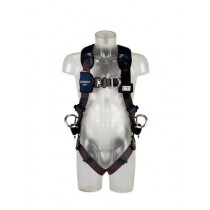
The EN 361 is the European standard that specifies the requirements, test methods and marking for complete fall arrest harnesses, which is essentially the link that holds the body, and the main component of such a system.
Key Technical Aspects:
-
Primary Function: its purpose is to restrain the worker's body during and after a fall, distributing the impact forces evenly across the thighs, pelvis, thorax and shoulders to minimise serious injury.
-
Approved Anchor Points: a harness certified under EN 361 must obligatorily have specific attachment points identified (usually an « A » or « A/2 »). Only the chest and dorsal points are authorised for fall arrest.
-
Compatibility: should not be confused with positioning support belts (EN 358), which are not designed to arrest free falls.
Discover Our Collection of Certified Safety Harnesses
STANDARD EN 355: THE ENERGY ABSORBER
If a worker falls into empty space, the sudden braking force can cause severe internal injuries (even with the harness on). This is where EN 355 comes in, which regulates energy absorbers.
Key Technical Aspects:
-
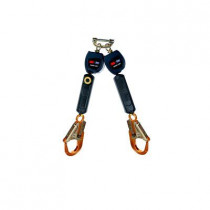
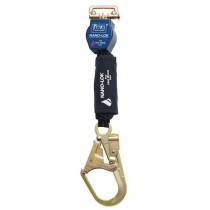
Primary Function: to dissipate the kinetic energy generated during a fall through the controlled rupture of special stitches or the tearing of an internal technical tape. This limits the impact force transmitted to the worker's body to a safe value (below 6 kN).
-
Configuration: is usually combined with tethering elements (slings) forming an inseparable set. The total length of the system (absorber + tethering elements + connectors) cannot exceed 2 metres to avoid excessively increasing the free fall distance.
-
Clg (Safety Distance): its design requires the technician to calculate the free fall space required below the work area (worker's height + equipment length + absorber elongation + 1 metre safety margin).
STANDARD EN 795: ANCHOR DEVICES (THE FIXED POINT OF RESISTANCE)
There is no point in having the best harness (EN 361) and a high-end absorber (EN 355) if the point at which we connect collapses. EN 795 regulates anchor devices designed to be fixed or temporary to the structure.
Key Technical Aspects:
-
Primary Function: They constitute the safe structural anchor point from which the entire fall protection system hangs.
-
Regulatory Classes: It is divided into different types (Class A: fixed structural anchors; Class B: temporary portable anchors; Class C: flexible horizontal lifelines; Class D: rigid rails; Class E: deadweight anchors).
-
Structural Strength: Depending on their class, they must support extreme static loads (typically between 10 kN and 12 kN) certified under CE marking, ensuring they will withstand the dynamic stress of one or several simultaneous falls (if they also comply with the technical specification CEN/TS 16415).
COMPARISON TABLE
|
European Standard
|
What product does it regulate?
|
Primary objective in the system
|
Key Distinguishing Element
|
|
EN 361
|
Complete fall arrest harness
|
Restrain and distribute force across the body
|
Attachment rings marked with the letter « A »
|
|
EN 355
|
Energy absorber
|
Reduce impact force to <6 kN
|
Textile protective sleeve with rippable stitches
|
|
EN 795
|
Anchor devices
|
Support the loads of the base structure
|
Classification by types (Classes A, B, C, D, E)
|
CONCLUSIONS: THE IMPORTANCE OF COMPATIBILITY
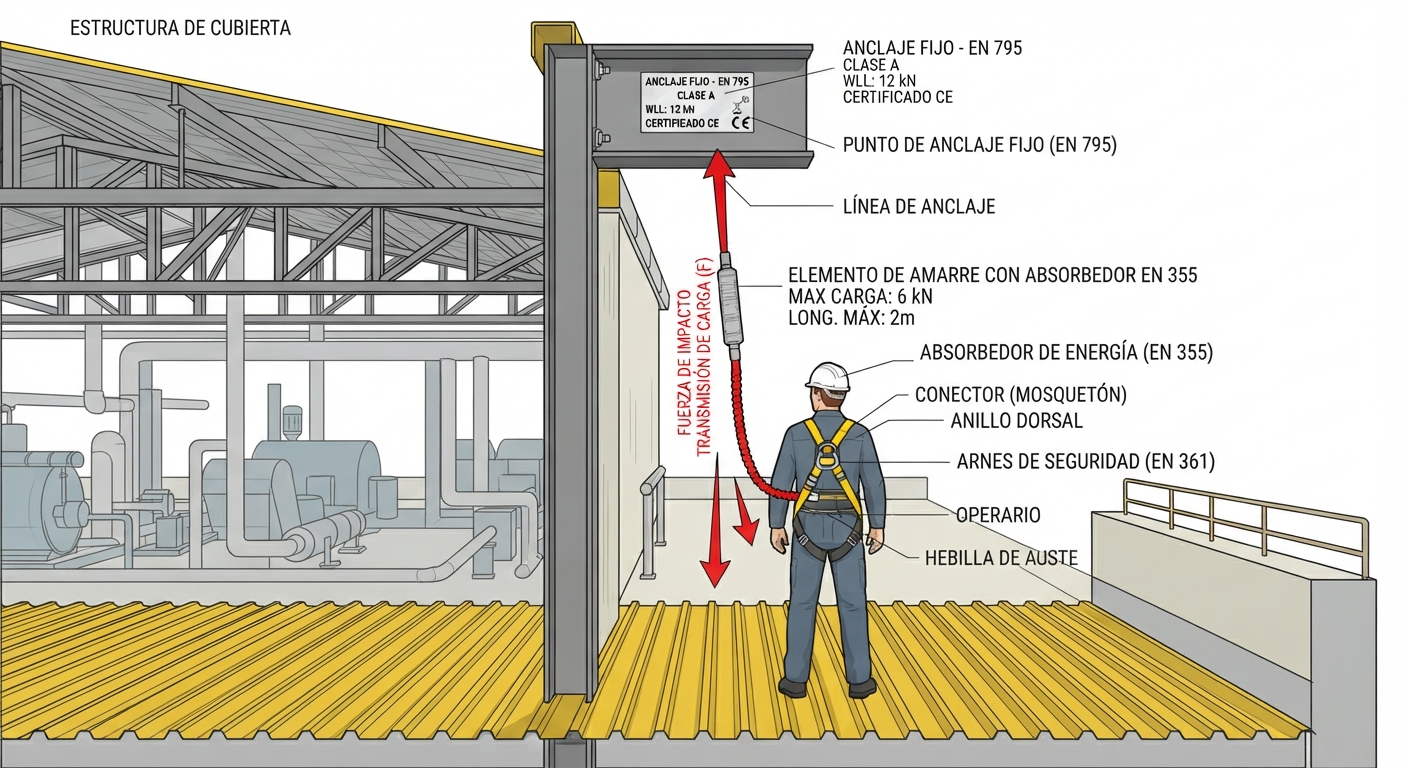
The great technical conclusion is that none of these standards work independently. An effective fall protection system is a perfect equation where the structure (EN 795), the connection and dissipation means (EN 355) and the restraint of the worker (EN 361) all play a role. Failing in any of these links breaks the safety chain.
At Sekureco.eu, as experts in Personal Protective Equipment (PPE), we emphasise that all components must be strictly compatible with each other and approved with CE marking, always prioritising inspection before each use and annual certification of fixed systems.
Do you need technical advice to verify the compatibility of your fall protection systems or to equip your team in compliance with European regulations?
Explore our specialised category in fall protection or contact our technical department to answer any questions on standards and industrial safety.
 English GB
 Español
  Français
  Deutsch
  Italiano
  Português PT