English GB
 Español
  Français
  Deutsch
  Italiano
  Português PT




€90.74
€90.74
(TAX incl.)
€74.99 (no TAX)
€74.99 (no TAX)
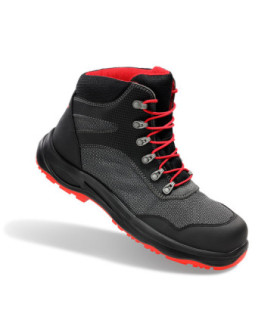
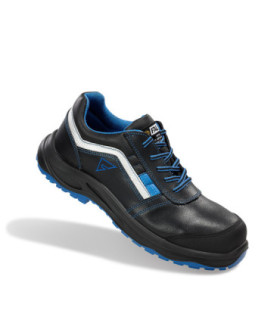
Water-resistant leather safety shoe S3S+HI+CI+SC+SR+HRO+FO+LG HR70 FAL
Wide range of security products for any type of industry and work
know us


Before discussing codes like S1, S2 or S3 - which we have already explained in detail in ourarticle on safety footwear codes -, it is useful to understand something more basic: what the EN ISO 20345 standard really requires from any footwear, regardless of the additional code it carries. All these codes are built on a common foundation of mandatory requirements, and this foundation is precisely what the standard itself regulates.
Moreover, the standard is not static: in 2022 an important revision was published that introduced changes in slip testing and several markings, replacing the 2011 version. In this article we explain what EN ISO 20345 requires as a foundation, what changed in the 2022 update, and how it differs from its sister standard, EN ISO 20346.
In order for a shoe to be called a "safety shoe" and receive at least the SB (Safety Basic) marking, it must pass these mandatory requirements:
Look in our catalogue for some certified models with these characteristics.
Everything that comes after - S1, S2, S3, S6, S7 and their variants - adds additional requirements to this common foundation, as we detail in our article dedicated to these codes.
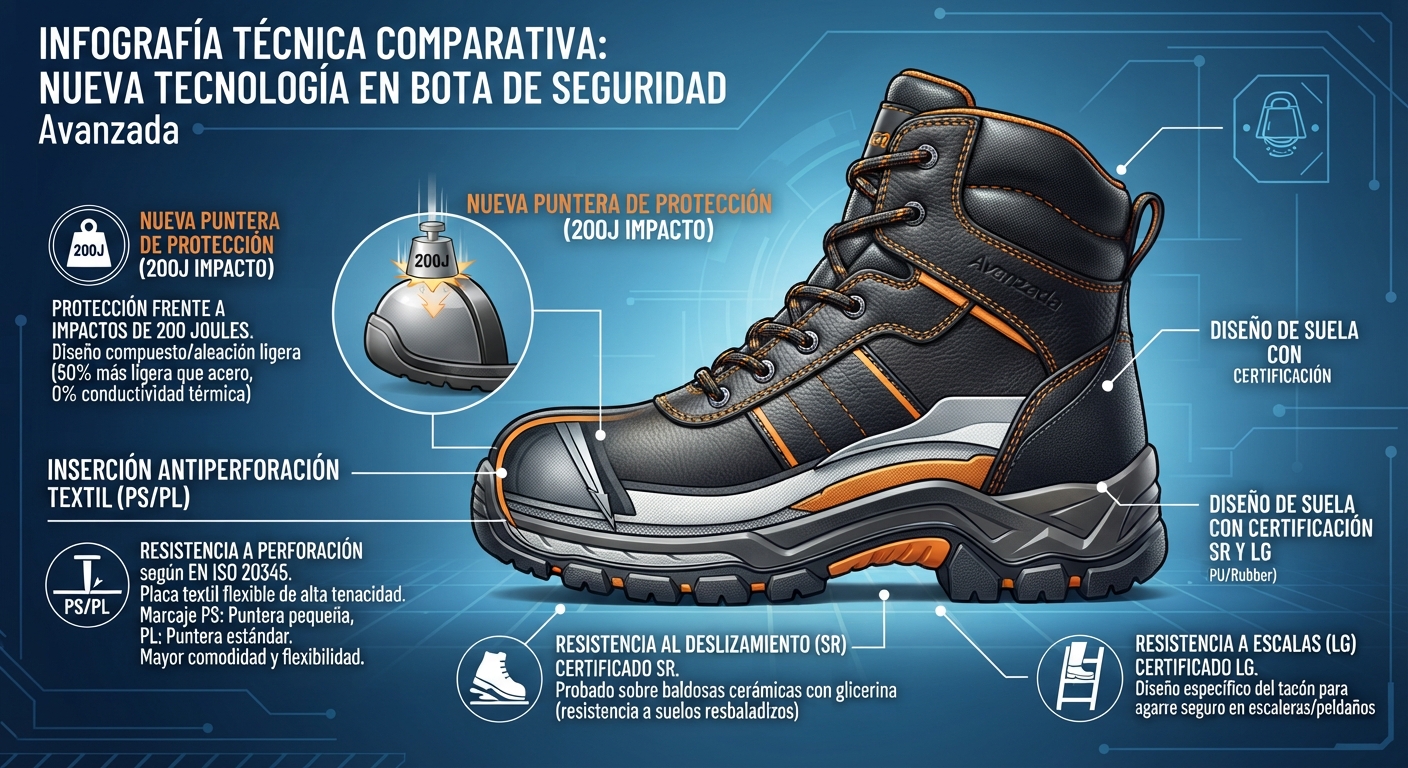
The EN ISO 20345:2022 version replaced the 2011 one, introducing changes that are useful to know if you compare old and new data sheets:
The slip test on ceramic tile with detergent (previously marked as SRA, optional) becomes a mandatory basic requirement for all safety footwear. As a result, the old independent SRA marking disappears: if the footwear also passes the test on steel with glycerin, it is now simply marked as SR (Slip Resistant), replacing the old SRA/SRB/SRC system.
For non-metallic insoles, the standard now distinguishes according to the diameter of the punch used in the test: PL marking (4.5 mm punch) or PS (3 mm punch), providing more precise information on the type of perforation risk covered.
The old marking for water absorption and penetration resistance in the upper (WRU) is replaced by WPA, with an updated test method.
The S3 category now mandatorily implies a steel insole and upper with WPA marking, and also features variants such as S3L and S3S (same S3 protection but with textile insole of different punch diameter, instead of metal insole).
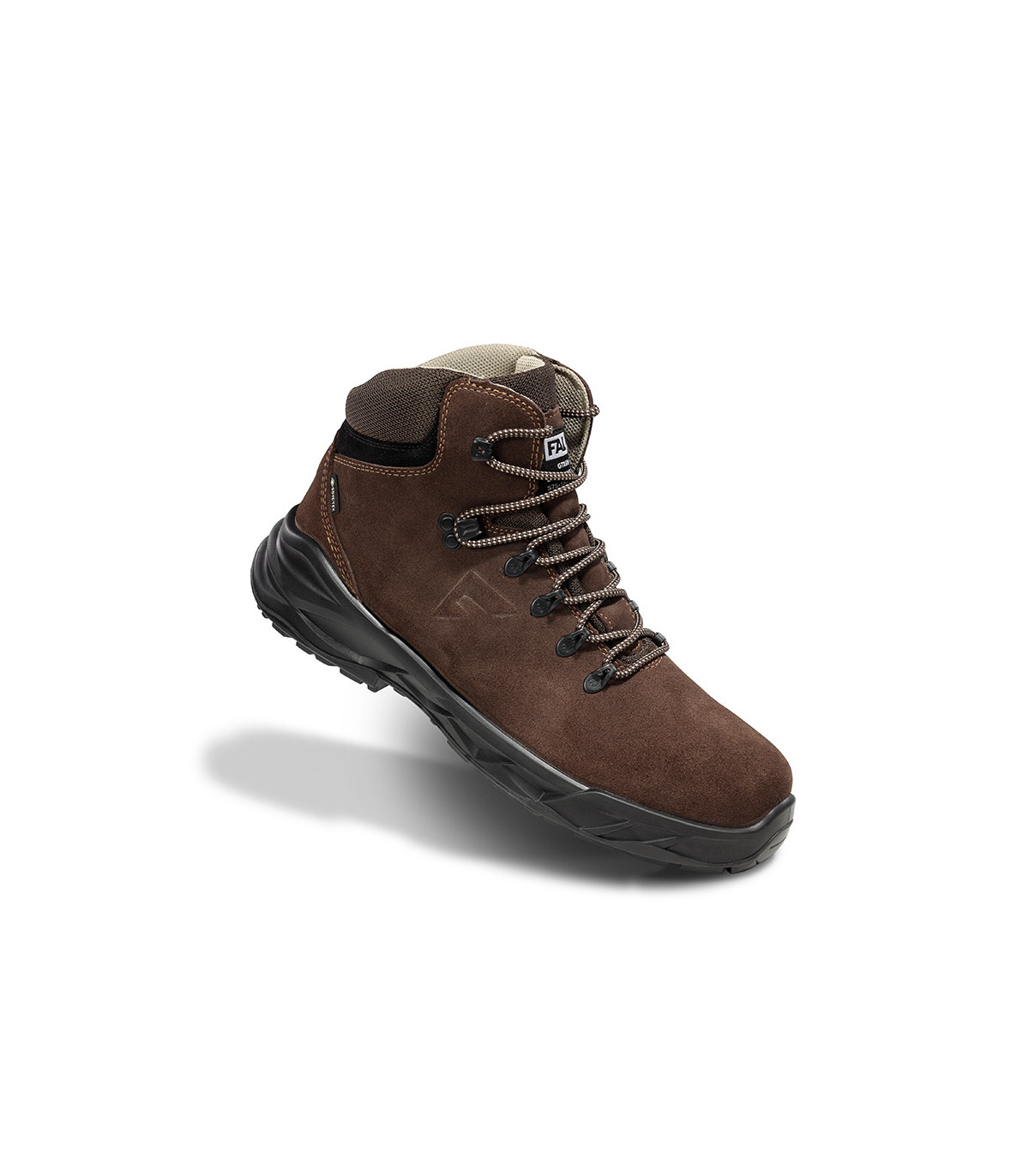
Discover the featured model S3 Safety Boot GORE-TEX S3+SRC+CI+WR FAL SEGURIDAD
Both the EN ISO 20345 and EN ISO 20346 standards regulate footwear with toe protection, but with a different level of requirement: EN ISO 20345 ("safety footwear") requires that the toecap withstands 200 joules of impact and 15 kN of compression; EN ISO 20346 ("protective footwear") requires a lower level of resistance in the toecap, designed for more moderate mechanical risks. When in doubt, always review the manufacturer's data sheet to confirm under which exact standard the model is certified.
It is the base level of the EN ISO 20345 standard: toecap resistant to 200 joules of impact and 15 kN of compression, without any additional requirements from codes S1 to S7.
Because the EN ISO 20345:2022 revision turned this slip test into a mandatory basic requirement for all safety footwear, eliminating the independent SRA marking; the new combined marking is SR.
Both indicate perforation resistance with non-metallic insole, but tested with different punch diameters: PL with 4.5 mm and PS with 3 mm, providing more specific information on the type of risk covered.
No. EN ISO 20345 requires higher impact and compression resistance in the toecap (200 J / 15 kN); EN ISO 20346 has a lower level of requirement, designed for more moderate mechanical risks.
Not automatically; footwear already manufactured and certified under the previous version remains valid during its useful life. The revision affects the certification of models manufactured from its entry into force.
Not every safety footwear data sheet reflects the latest changes to the standard. At Sekureco you will find work footwear certified under EN ISO 20345, with markings updated according to the current revision.
Consult our Work Footwear collection and always verify under which version of the standard the model is certified before purchasing.
> CLOTHES AND COMPLEMENTS
Please sign in first.
Sign in