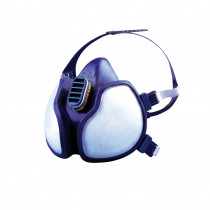
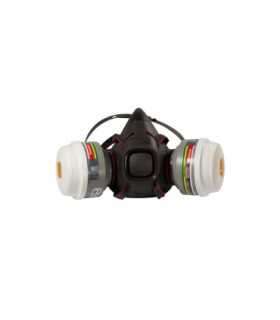
In the industrial sector, paint shops, coating processes and solvent handling expose workers to highly hazardous chemical contaminants. Organic vapours, paint aerosols and suspended particles can cause serious damage in the short and long term if appropriate Personal Protective Equipment (PPE) is not used.
Understanding the related standards will help us select the correct type of mask and filters, which is vital to guarantee respiratory health in the work environment.
CHEMICAL RISK, ORGANIC VAPOURS AND PARTICLES
During painting work (whether by spray gun, roller or dipping) and the use of solvents, strippers or resins, two main types of harmful agents are released:
-
Organic gases and vapours: Volatile substances from solvents, thinners and solvent-based paints that easily penetrate the respiratory tract.
-
Aerosols and solid particles: Paint spray mists and fine particles generated during drying or sanding of surfaces.
EUROPEAN REGULATORY FRAMEWORK AND FILTER TYPES
Compliance with CE certification standards ensures that respiratory protection equipment provides an effective barrier against these substances:
-
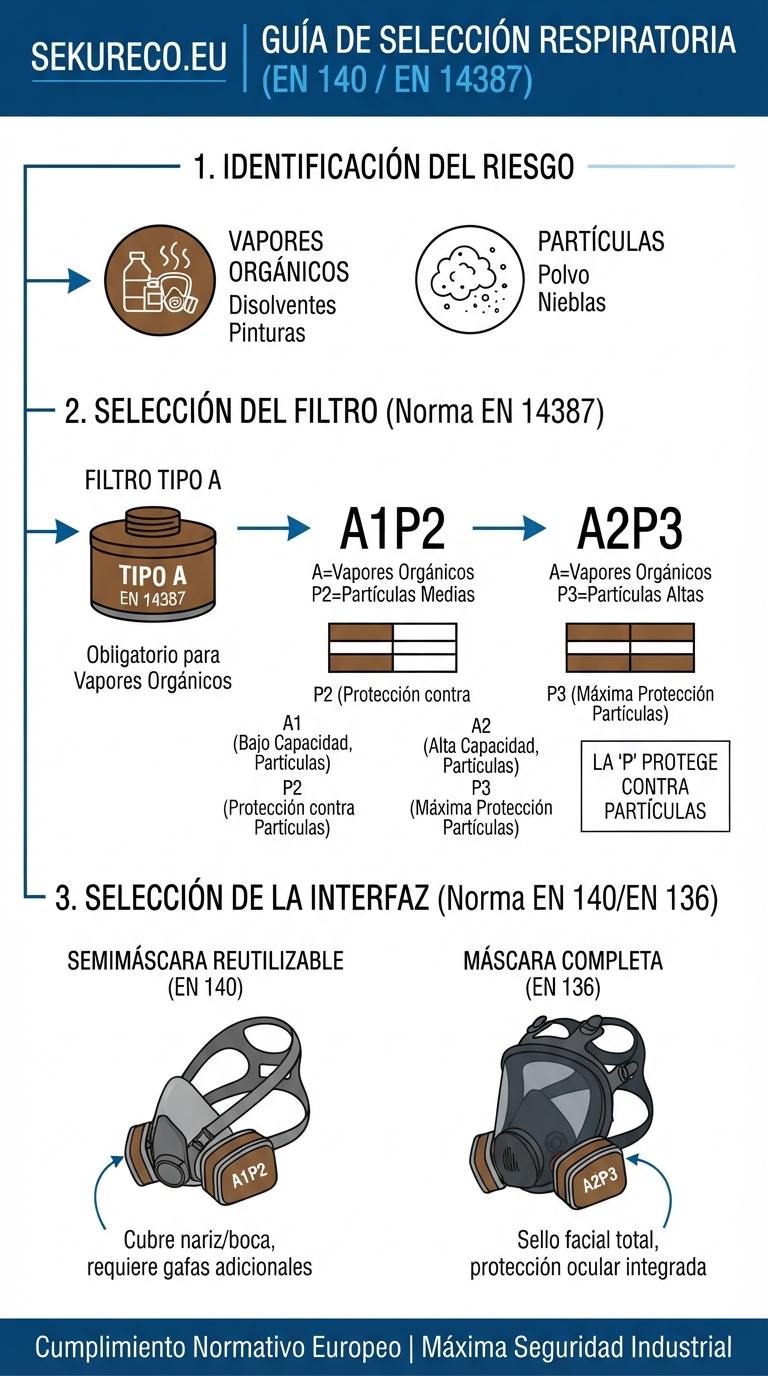
Standard EN 140: regulates the requirements for half-masks for respiratory protection and quarter masks, ensuring a hermetic fit and biocompatible materials.
-
Standard EN 14387: specifies the requirements for gas filters and combined filters. For painting and solvent work, filters must be of type A (brown marking), specifically designed to retain organic vapours from compounds with a boiling point above 65 °C.
-
Gas filter classes (Class 1, 2 or 3): indicate the retention capacity and maximum concentration of contaminant in the work environment.
-
Particle protection (P2 or P3 filters): combined filters are often used (for example, A2P2 or A2P3) to add the retention of solid and liquid aerosols to gas filtration.
SELECTION CRITERIA ACCORDING TO APPLICATION
Spray painting and confined or poorly ventilated spaces
For applications with high concentrations of vapours and mists (such as industrial spray booths or spaces with limited air renewal), the use of half-masks or full-face masks equipped with high-capacity combined filters (such as A2P3) is required. The full-face mask also provides essential eye protection against chemical splashes.
Manual application and occasional maintenance work
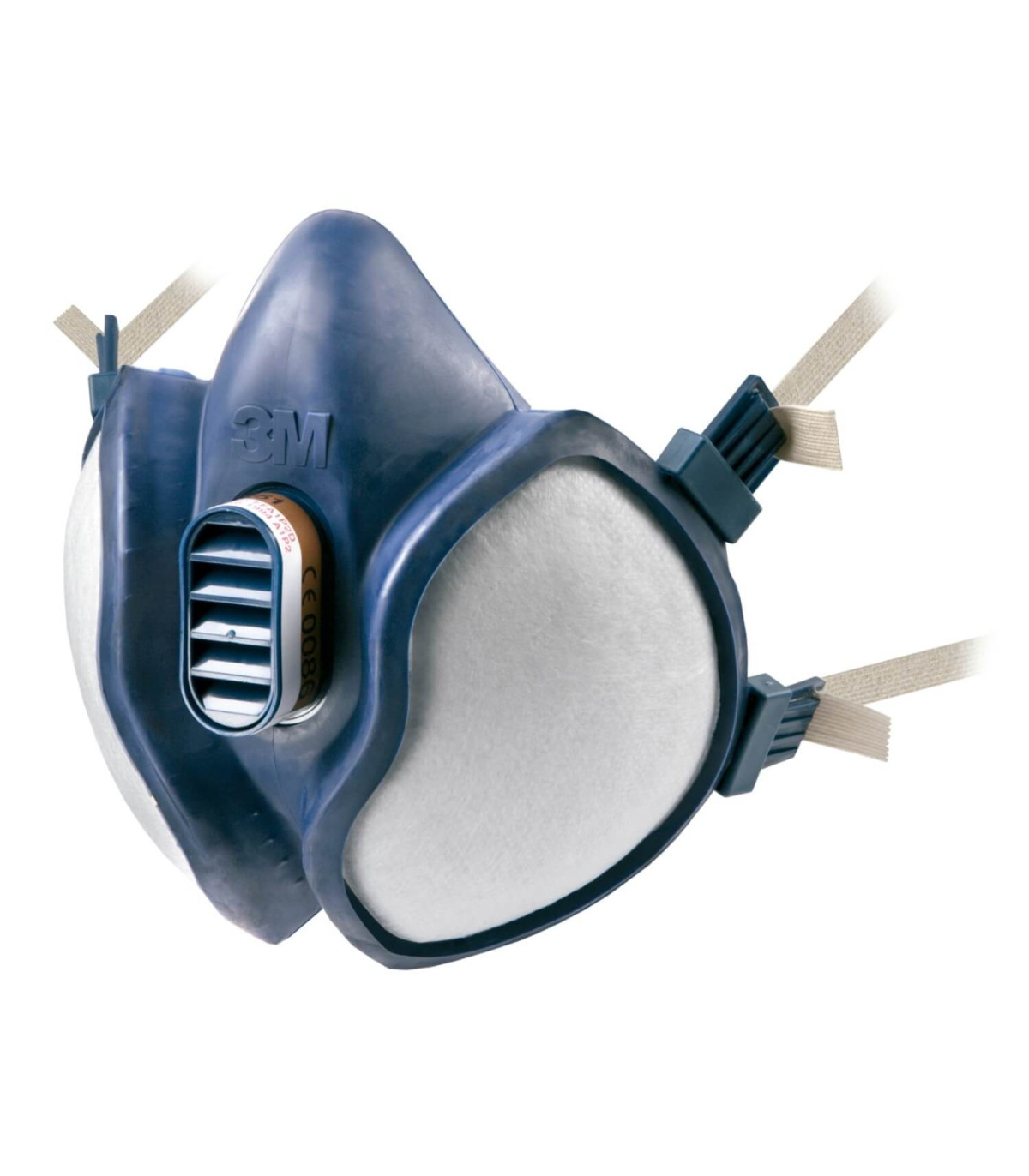
For shorter duration work in open or well-ventilated spaces, reusable half-masks with replaceable A1P2 class filters offer an ergonomic, lightweight and safe solution that prevents operator fatigue.
Discover our collection of respiratory protection filters here
FEATURED PRODUCTS AND SEKURECO SOLUTIONS
View product:
View product:
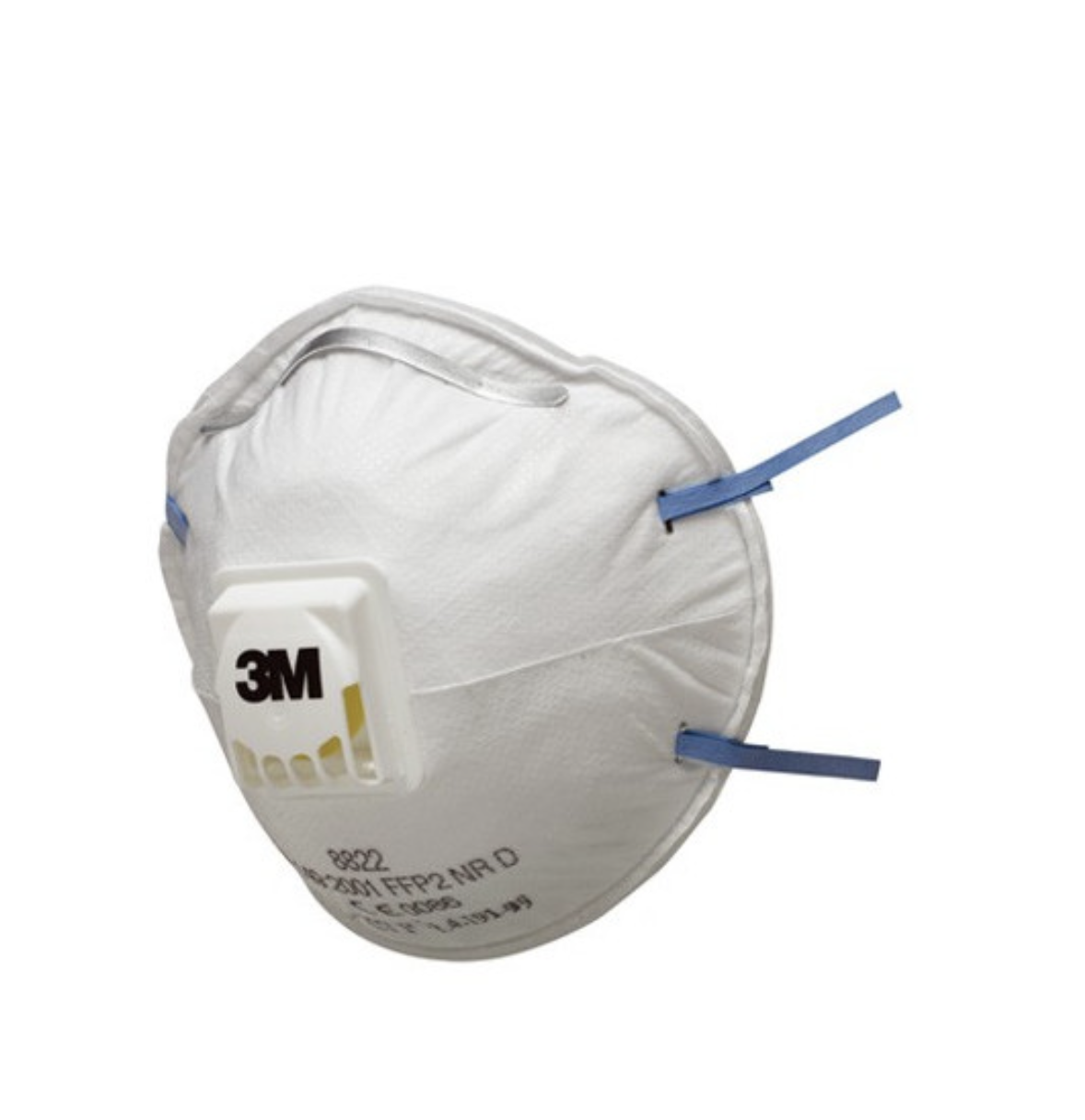
View product:
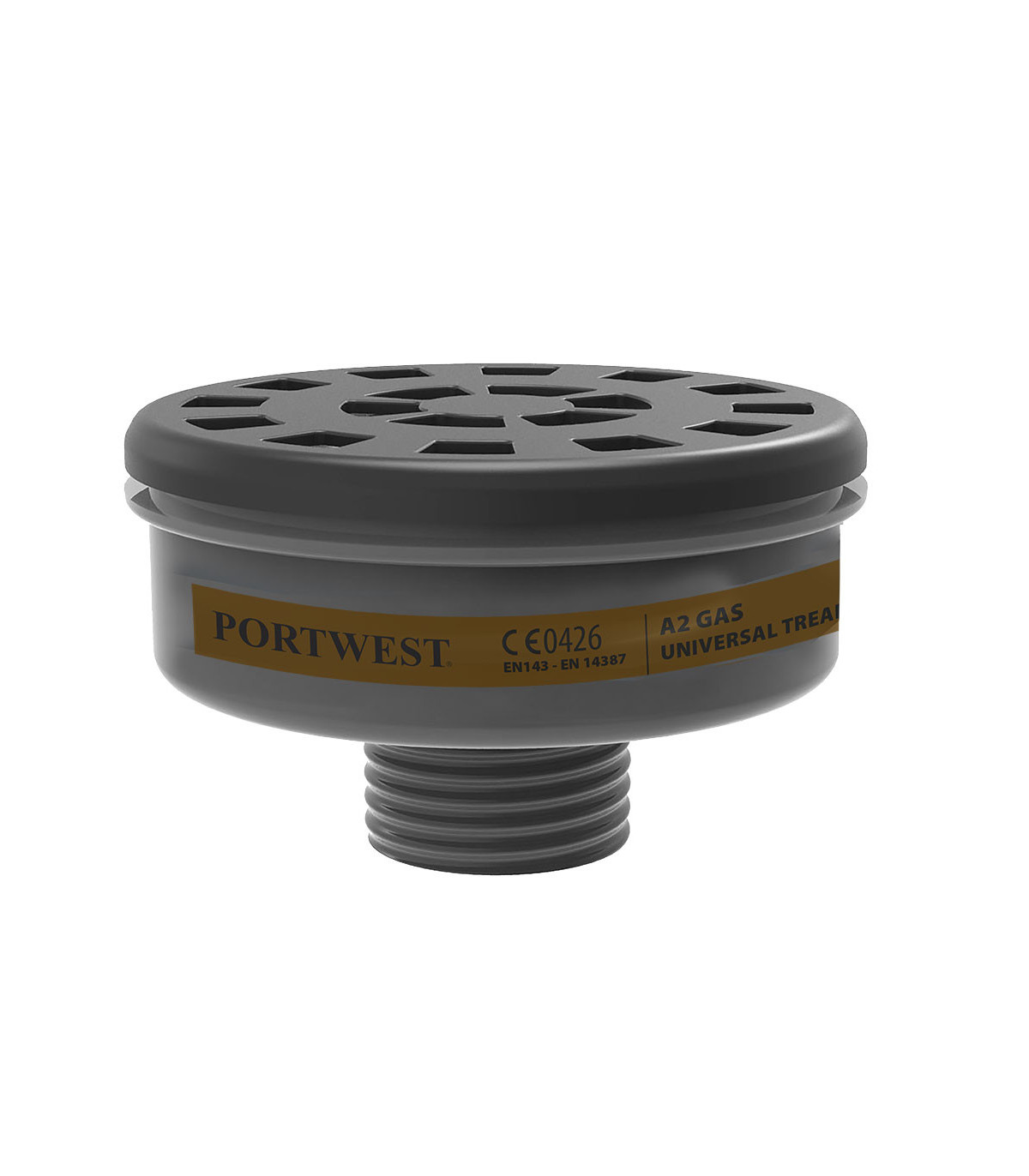
FREQUENTLY ASKED QUESTIONS
Can you use a standard dust filter (P2 or P3) for painting with solvents?
No. Particle filters only retain dust, fumes and solid aerosols, but offer no protection against chemical gases and vapours from solvents. For organic vapours, the use of type A (brown) filters is strictly necessary.
How do I know when to change my organic vapour filters?
Chemical filters have a limited service life that depends on the concentration of the contaminant, ambient humidity and the user's breathing rate. A key indicator of saturation is the perception of solvent odour or taste through the filter, at which point it must be replaced immediately, regardless of hours of use.
What is the difference between a half-mask and a full-face mask for painting?
The half-mask covers only the nose and mouth, so it requires the simultaneous use of independent protective goggles to prevent eye irritation from vapours. The full-face mask seals the entire face, protecting both the respiratory tract and eyes from splashes and aggressive atmospheres.
Do you need to optimise the selection of respiratory protection equipment or need advice on another safety category at Sekureco?
Explore our specialised respiratory protection catalogue or contact our technical team to resolve any questions about European standards and industrial PPE.
 English GB
 Español
  Français
  Deutsch
  Italiano
  Português PT