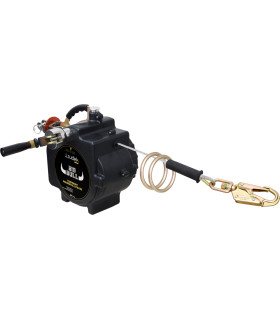
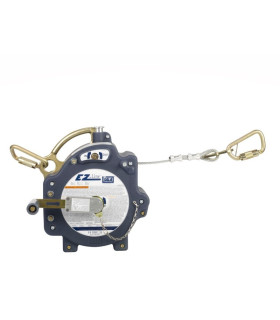
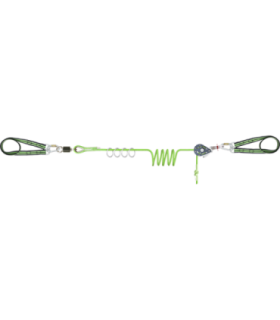
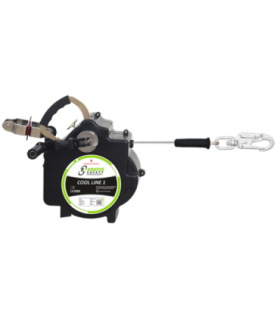
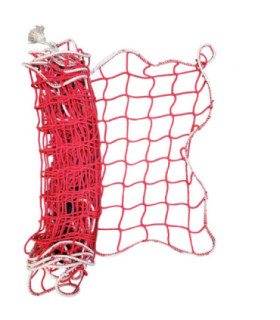
Fall arrest lines are flexible anchor systems, composed of a cable or rail secured between two or more points, that allow workers to move along a surface whilst remaining connected via fall protection equipment (harness and connecting element). These elements are vital in working at height, where safety admits no compromises.
Not all fall arrest lines are the same. The choice between a temporary fall arrest line and a permanent fall arrest line depends fundamentally on the duration of the work, the frequency of equipment use and the structure where it will be installed. Understanding these differences will help us comply with the Regulation (EU) 2016/425 on PPE and the current European installation standards.
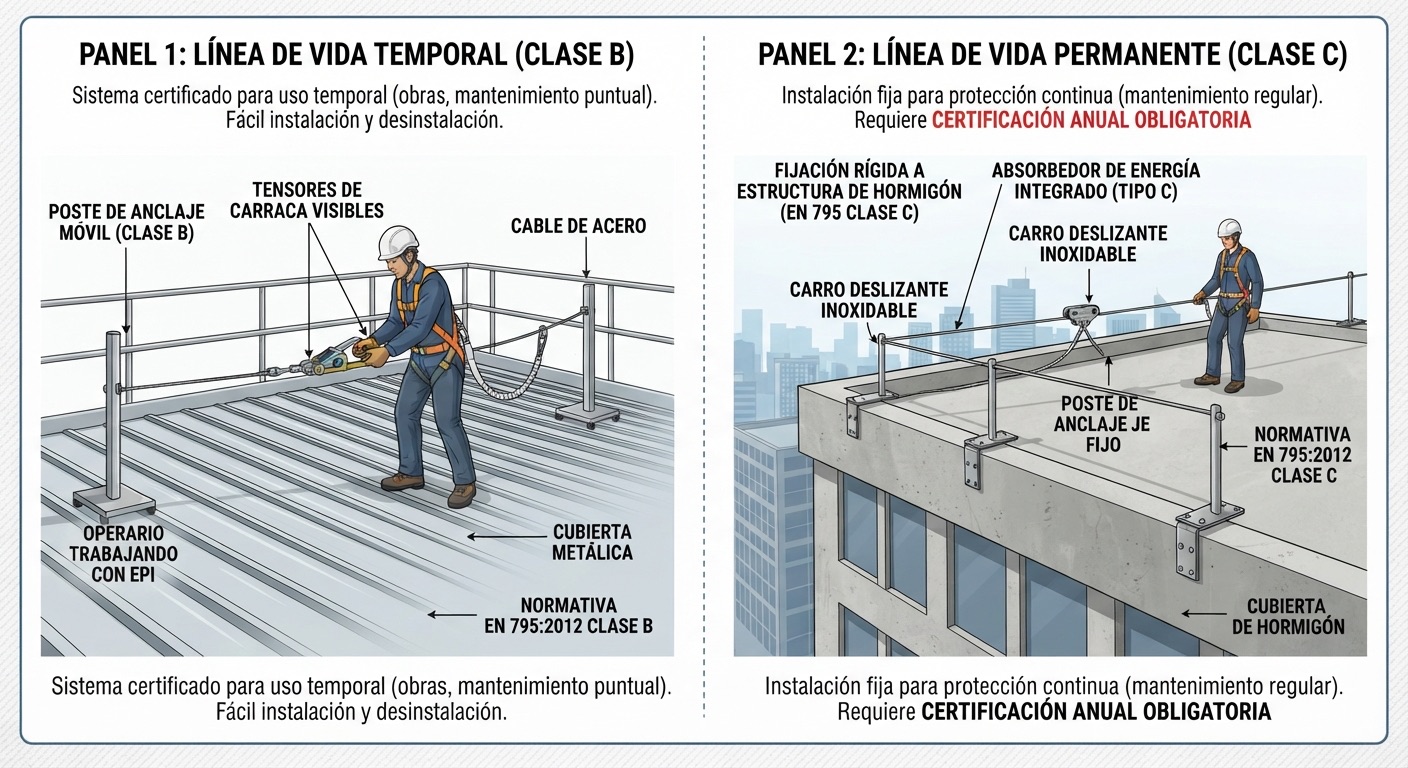
TEMPORARY FALL ARREST LINE (EN 795 CLASS B OR C)
These systems are designed to be installed and removed quickly when the work or specific maintenance task is completed. They are the ideal solution for sectors such as construction, maintenance of industrial roofs, façade cleaning or plant shutdowns.
Technical and normative features:
-
Standard: they are mainly governed by the EN 795:2012 standard which sets performance, test and marking requirements for portable anchor devices (Class B) or flexible fall arrest lines based on cables or ropes (Class C).
-
Components: typically use high-strength galvanised or stainless steel cables, or even approved synthetic ropes. They are tensioned via a ratchet system or manual tensioner.
-
Installation: they are fixed to existing structures that must have adequate strength (certified by an engineer or competent person), such as concrete pillars, metal profiles or structural anchor points. They do not require complex civil works for installation.
-
Mobility: they allow continuous movement of one or more workers (depending on the manufacturer and certification) along the span, passing through intermediate points safely if the system allows.
Sekureco advantage: At Sekureco.eu we recommend temporary fall arrest lines for their versatility and rapid implementation, being essential for rescue teams and non-routine maintenance.
PERMANENT FALL ARREST LINE (EN 795 CLASS C OR D)
These fall arrest lines are designed to form part of the building or installation structure indefinitely. They are the standard solution for areas where periodic maintenance tasks are carried out, such as revision of air conditioning equipment (HVAC) on roofs, cleaning of solar panels or maintenance of overhead cranes.
Technical and normative features:
-
Standard: they comply with the EN 795:2012 Class C standard (permanent flexible fall arrest lines) or Class D (rigid fall arrest lines/rails). Additionally, they must comply with CEN/TS 16415 if they are intended for simultaneous use by more than one person.
-
Components: generally manufactured from high-quality stainless steel (AISI 316) to ensure maximum weather and corrosion resistance. Posts or energy absorbers are designed to withstand extreme loads for years.
-
Installation: they require professional and certified installation, often involving civil works (drilling of slabs, waterproofing of roofs, welding to metal structures). Project design and installation must be validated by a specialist.
-
Maintenance: being permanent, they are subject to mandatory annual inspections by authorised personnel or the manufacturer, ensuring the system maintains its mechanical performance.
Consult Sekureco's specialised Fall Arrest Lines category and choose 100% professional equipment.
COMPARATIVE TABLE: TEMPORARY VS. PERMANENT
| Feature |
Temporary Fall Arrest Line |
Permanent Fall Arrest Line |
| Duration |
Short/Medium (days, weeks) |
Long (years) |
| Use |
Occasional, sporadic, rescue |
Frequent, periodic, routine |
| Standard |
EN 795 Class B / C |
EN 795 Class C / D (and CEN/TS 16415) |
| Installation |
Manual, quick, without civil works |
Professional, fixed, requires civil works |
| Materials |
Galvanised steel, technical ropes |
Stainless steel AISI 316 |
| Inspection |
Before each use, annual review |
Annual mandatory inspection by expert |
If you would like to know more about horizontal fall arrest lines, please consult our article: How to Choose a Horizontal Fall Arrest Line? Selection Guide According to EN 795
CONCLUSIONS AND SELECTION CRITERIA
The fundamental difference between the two systems lies in their purpose and lifecycle. One should not use a temporary fall arrest line for weekly maintenance over 10 years, nor overspend the budget by installing a permanent system for a two-month punctual project.
As experts in Personal Protective Equipment (PPE), we emphasise that the choice must be based on prior Risk Assessment and a technical installation project. Both systems, if correctly certified and maintained, offer the highest level of safety, but their correct application is the responsibility of the employer and the prevention technician.
Do you need technical advice for designing and installing a fall arrest line in your company? At Sekureco.eu we have a team of specialists in fall protection who will help you select the solution that best suits your needs, ensuring compliance with European regulations. Explore our fall protection systems category or contact our technical department.
 English GB
 Español
  Français
  Deutsch
  Italiano
  Português PT