English GB
 Español
 Français
 Deutsch
 Italiano
 Português PT





€140.27
€140.27
(TAX incl.)
€115.93 (no TAX)
€115.93 (no TAX)
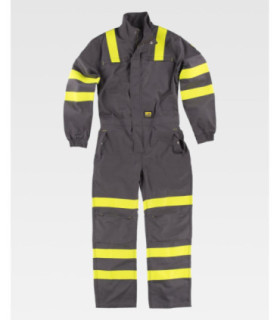
Composition: 87% Cotton, 12% Nylon, 1% Antistatic Fiber. Weight 260.
Wide range of security products for any type of industry and work
know us


Personal Protective Equipment (PPE) rarely fails because of poor quality, but because it wasn't suitable for the type of risk, didn't fit the worker, wasn't compatible with the rest of the equipment, or had been stored in poor conditions for months. Choosing PPE incorrectly can create a false sense of security and lead to unnecessary risks in industry.
In this guide, we've compiled the 10 most common mistakes when selecting, using and maintaining personal protective equipment, organised into three phases: purchase, use and maintenance. For each one, we tell you how to avoid it and where to go deeper. If you already know what you need, you can go directly to our workwear and protective equipment catalogue.
Misinformation about the specific risks you'll be exposed to, combined with a lack of workplace assessment, are usually the main errors before buying PPE. However, in today's industry there's also the threat of confusing similar standards. That's why we've listed and explained the most common selection errors:
PPE is selected based on the job's risk, not the catalogue. Prevention regulations start with risk assessment: first you identify what hazard exists (impacts, chemicals, noise, falls, heat, electricity...) and its level; then you select the PPE that covers it. Buying "some goggles" or "some gloves" without this step is the root of most other errors.
How to avoid it: request or consult the workplace risk assessment and buy based on it.
This is the most technical and most costly error. Some real examples:
Construction helmet (EN 397) and bump cap (EN 812): the cap does not protect against falling objects and should never replace a helmet.
Safety glasses and face shield: they cover different risks; in welding, depending on the process, glasses may not be sufficient.
Antistatic footwear (ESD) and insulating footwear: they don't solve the same problem.
Particle filter and gas filter: a P-type filter does not retain gases or vapours.
Generic flame-resistant clothing and welder's clothing (EN ISO 11611): the former doesn't necessarily cover molten metal splashes.
How to avoid it: check that the marking standard matches the specific risk, not just that the product "has a standard".
All PPE must carry CE marking in accordance with Regulation (EU) 2016/425. Category III PPE – for serious or irreversible risks, such as hearing protection, respiratory protection or fall protection – also requires a notified body, identified by a four-digit number next to the CE. An identical-looking product without that real certification doesn't provide the same level of protection.
How to avoid it: check the marking, the notified body number where applicable, and the manufacturer's declaration of conformity.
An oversized glove loses sensitivity, a mask that doesn't seal won't filter, and a poorly fitted harness won't distribute the load in a fall. Additionally, uncomfortable PPE tends not to be worn. Comfort isn't a luxury: it's what determines whether the worker wears it all shift.
How to avoid it: request various sizes, test the equipment with the rest of the PPE on, and in respiratory protection, check the facial seal.
PPE is usually used in combination, and not all pieces fit together:
A hearing protector attached to a helmet must be certified for this (EN 352-3).
Goggles can break the seal of a mask.
A complete fall protection system (harness, lanyard, energy absorber, anchor point) must be coherent as a whole.
A safety line certified for one user doesn't automatically work for several.
How to avoid it: when buying new PPE, ask yourself what other equipment it will be used with at the same time.
If you want to learn about fall protection systems and safety lines products, visit our specialist category.
Price matters, especially for large equipment purchases, but cheap PPE that breaks sooner, that nobody wants to wear, or that doesn't cover the actual risk ends up costing more. Compare the cost per actual use, not the unit price.
How to avoid it: request technical specifications, compare standards and protection levels, and only then compare prices.
Regulations require informing and training workers on the correct use of PPE. A harness given without knowing how to adjust it, or filters without knowing when to change them, become an added risk. Manufacturers must provide an information leaflet in the language of the country of use: read it and share it.
How to avoid it: accompany each delivery with brief practical training and keep the leaflet accessible.
More is not always better. In hearing protection, for example, a protector with excessive attenuation isolates the worker from their surroundings and prevents them from hearing alarms or communicating. In clothing, too many layers increase thermal stress. And the opposite error, falling short, is obvious.
How to avoid it: match the protection level to the measured risk, not to the maximum available.
Many PPE items have limited shelf life and specific storage requirements:
Respiratory filters degrade even if unused if poorly stored or opened.
Earplugs and other PPE carry manufacturing or expiry dates.
Harnesses and fall protection components require inspection before each use and regular reviews.
How to avoid it: note the purchase date, respect storage conditions and remove any PPE showing signs of wear, cuts or deformation.
Technical clothing loses properties with washing and must follow the manufacturer's instructions (for example, the maximum number of cycles). Footwear wears out, soles crack and visors scratch. PPE that no longer serves its function should be removed, even if it "still works".
How to avoid it: define replacement criteria by PPE type and review them regularly.
| Question | What you should be able to answer |
| What risk does it cover? | Identified in the risk assessment |
| What standard certifies it? | Corresponds to the risk, not a similar one |
| Does it have CE marking (and notified body if applicable)? | Yes, verifiable |
| Is it the correct size and comfortable? | Tested with the rest of the equipment on |
| Is it compatible with other PPE? | Checked |
| How is it maintained and when is it replaced? | Defined in writing |
If you're equipping a complete team or unsure between two models, our team can guide you according to your job and the risk you need to cover.
Contact us and we'll advise you (or email us: info@sekureco.eu)
If your question is about a specific type of PPE, these guides and categories will help you choose better:
Working at height: Fall Protection category · Working at height: we explain the differences between EN 361, EN 355 and EN 795
Respiratory protection: respiratory protection filters · Filters for organic vapours: Type A and AX explained
Hearing protection: hearing protectors · How to choose the right hearing protection? Buying guide
Eye and face protection: safety glasses · What standard regulates safety glasses? Complete EN 166 guide
Safety footwear: work footwear · The definitive guide to safety footwear: classification, standards and technical protection
Welding: flame-resistant welding clothing · Welding clothing: What a welder should wear according to EN ISO 11611
Electrical work: Electrician category · PPE for electrical work: What equipment an electrician needs according to risk
Choosing PPE correctly is half the protection; using and maintaining it correctly is the other half. At Sekureco you'll find certified equipment for every risk, with advice to get it right first time.
Identify the job's risk based on the risk assessment. PPE is selected for that specific risk, not the other way around.
It must carry CE marking and a reference to the corresponding standard. For Category III PPE, also the four-digit number of the notified body.
Not necessarily. What matters is that it covers the actual risk, is certified for it and fits the worker. Expensive, poorly chosen PPE protects less than suitable equipment.
When it expires, shows wear, cuts or deformations, or has suffered an impact or fall, according to the manufacturer's instructions. For some PPE, such as filters, replacement is also needed due to saturation.
Often yes, but compatibility must be checked, especially for equipment that works as a system (fall protection) or that couples together (hearing protection with helmet).
The employer must inform and train the worker, and the manufacturer must provide the product information leaflet, technical datasheets, user manuals and CE certifications.
> CLOTHES AND COMPLEMENTS
Please sign in first.
Sign in