English GB
 Español
 Français
 Deutsch
 Italiano
 Português PT




€0.58
€0.58
(TAX incl.)
€0.48 (no TAX)
€0.48 (no TAX)
Disposable earplugs ES01005 yellow neons with cord EARSOFT (200 pairs) 3M.
Packaging in a bag.
Wide range of security products for any type of industry and work
know us


Two workers exposed to the same level of noise may need completely different hearing protection. The decibel level and the SNR are just the starting point: the actual choice also depends on whether the worker is wearing a helmet, glasses, or mask at the same time, whether the exposure is continuous or intermittent, whether they need to communicate during the task, and even the climate of the work environment.
In this article, we will address the practical selection criteria - beyond the regulatory calculation of the SNR, which we have already explained in detail in our article on mandatory hearing protection and SNR - to help you choose the protector that your team will actually wear throughout the day, not just the one that meets the minimum legal requirements on paper.
As a quick reference before diving into the practical criteria: RD 286/2006 establishes the mandatory use of hearing protection starting from 85 dB(A) of equivalent daily level, and every protector must comply with the EN 352 standard with its corresponding certified SNR value. If you need to review these thresholds or understand how the SNR is calculated, we elaborate on this in detail in our article dedicated to that regulation. Here we assume you already know what level of attenuation you need, and we focus on what type of protector is most suitable for effective use.
If noise is present throughout the day, earmuffs or reusable plugs are usually more practical, as the worker does not need to put them on and take them off constantly. If the exposure is intermittent - entering and exiting a noisy area several times a day - a protector that is easy to put on and take off (foldable earmuffs, disposable plugs) reduces the temptation to forgo it "for a moment."
This is one of the most overlooked criteria, and one of the most determining factors for whether the protector is used correctly or not:
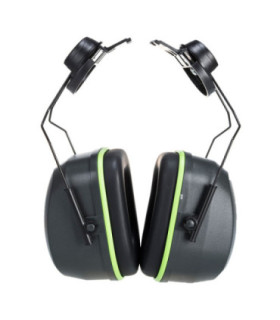
With safety helmet: specific earmuffs with helmet attachment are needed, not conventional headband earmuffs, which do not fit securely over a helmet.
With safety glasses: the arms of the glasses can break the seal of the earmuff cushion, reducing actual attenuation. It is advisable to choose glasses with flat and flexible arms when combining both PPE, as explained in our article on compatibility between hearing and eye protection.
With mask: the straps of the mask can also interfere with the earmuff cushion; in these cases, plugs are usually a more compatible alternative.
In hot or humid environments, earmuffs can become uncomfortable due to sweat accumulation under the cushion; plugs ventilate the ear area better during long hot days. In environments with dust or particles, on the other hand, reusable plugs require more careful handling (clean hands when inserting them), while earmuffs do not come into direct contact with the ear canal.
Read our article on: Proper storage of PPE: Industrial conservation guide
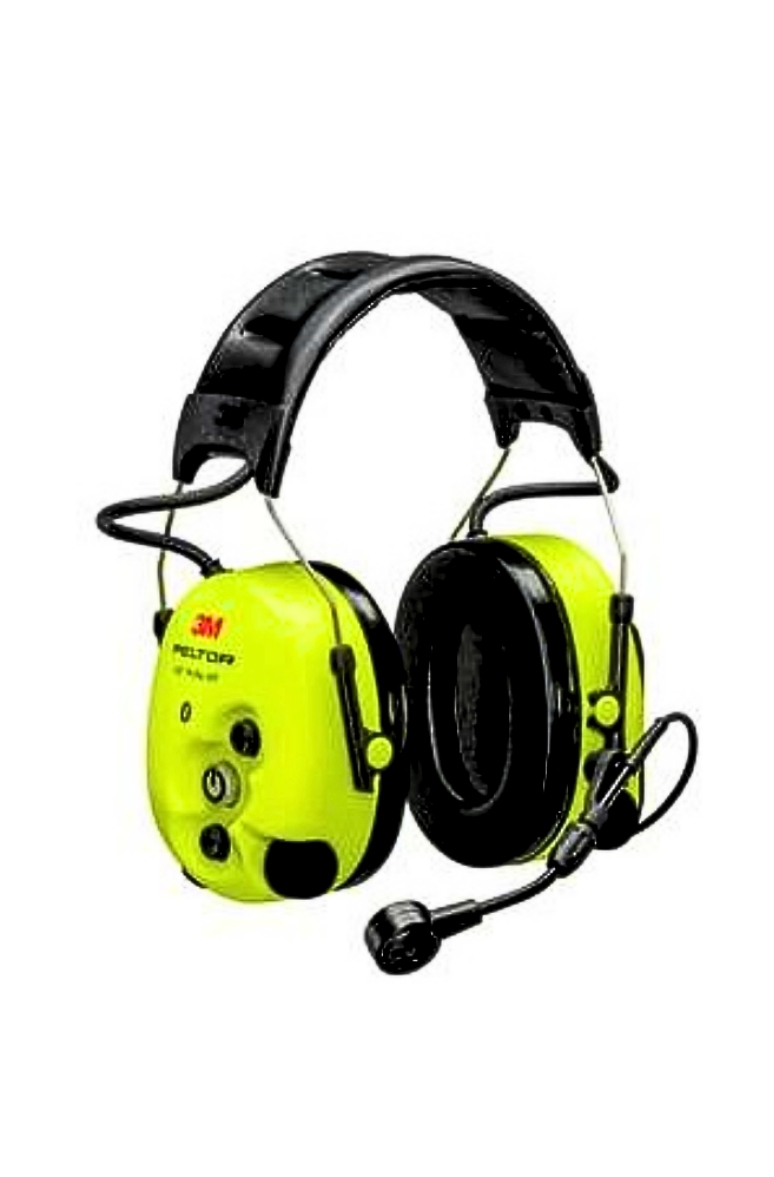
If the position requires receiving verbal instructions, communicating via radio, or perceiving specific alarms, it is advisable to consider electronic protectors with active listening function, which attenuate dangerous noise but allow for conversation or perception of relevant alert sounds.
Disposable plugs are the most hygienic option for shared shifts or occasional visitors; earmuffs and reusable plugs require periodic maintenance (cleaning, replacement of cushions) to maintain their certified attenuation level over time.
Intermittent exposure, with frequent placement and removal.
Shared use among different workers (with proper hygiene).
Combination with safety helmet using specific attachment.
Preference for a more visible fit that is easy for the safety officer to supervise.
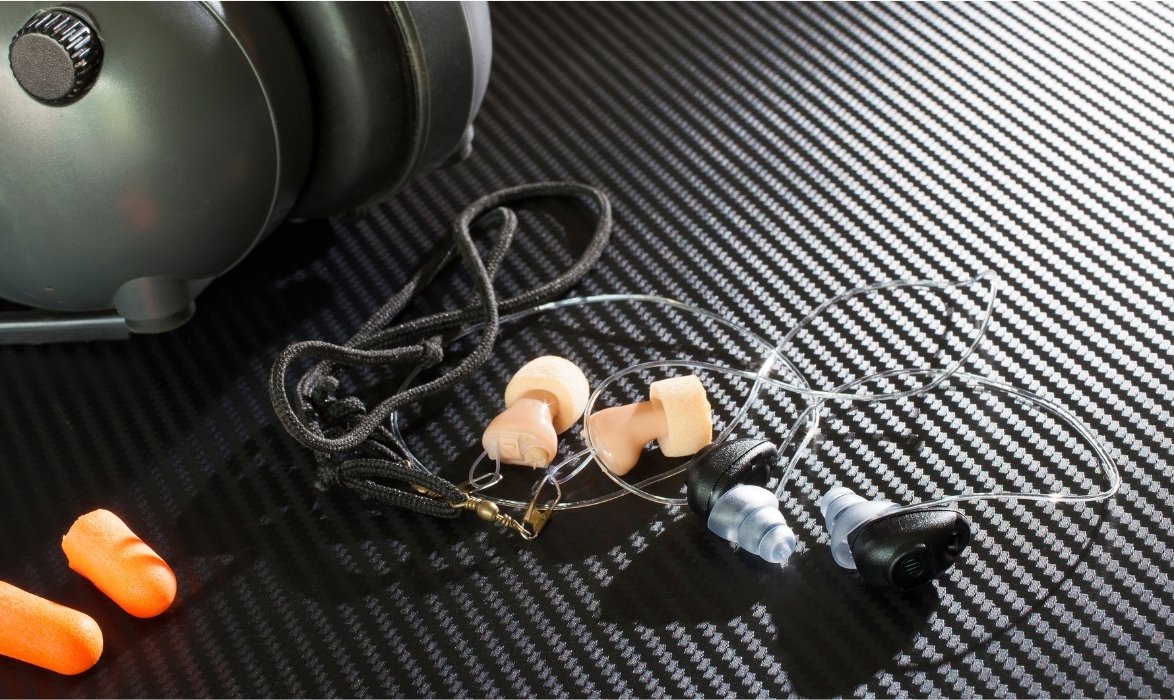
Continuous exposure throughout the day, with greater prolonged comfort.
Hot environments or need for greater ventilation in the ear area.
Combination with other head PPE that already occupy the ear area (mask, glasses with wide arms).
Tight spaces where the bulk of earmuffs may be uncomfortable or impractical.
In our Hearing Protectors category at Sekureco, you will find options for each of these criteria:
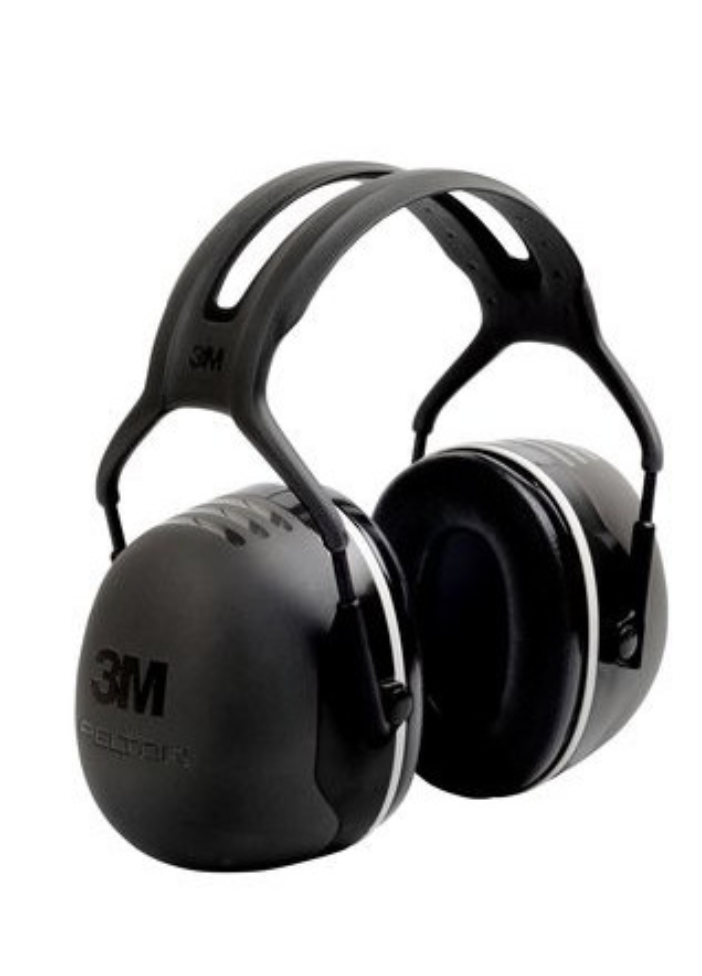
General use and intermittent headband earmuffs.
See featured product: Black headband earmuffs X5ASV 3M PELTOR
Helmet-compatible earmuffs, specifically designed to combine with safety helmets without compromising the seal.
Neck-supported earmuffs for quick alternation between use and removal.
Disposable plugs in box format, ideal for occasional exposure or visiting personnel.
See product: 1100 moldable and disposable earplugs without cord 37 dB SNR 3M

Reusable plugs, with a higher initial cost but more economical in the long run for daily exposure.
Electronic protectors with active listening function, for positions that require constant communication without sacrificing attenuation.
Hygiene kits and replacement cushions, to maintain the performance of your reusable earmuffs over time.
It depends on individual comfort and the environment: plugs usually ventilate better in warm climates, while earmuffs are easier to visually supervise and share between shifts.
Prioritize specific earmuffs with helmet attachment, and if you wear glasses, opt for models with flat and flexible arms to minimize attenuation loss due to interference with the cushion.
Not necessarily; many electronic models meet the same EN 352 certification level as a passive protector, while also adding the active listening function for relevant environmental sounds.
It is possible in extreme noise environments, but it should be calculated with technical criteria and not improvised; consult our article on the SNR to understand why both values do not directly add up.
It depends on visible wear and the manufacturer's instructions; in general, they should be replaced at any sign of hardening, cracks, or loss of elasticity that compromises the seal.
The best hearing protector is not the one that attenuates the most on paper, but the one that your team wears throughout the day without taking it off due to discomfort. At Sekureco, you will find earmuffs, plugs, and electronic protectors certified EN 352 for every type of position and combination of PPE.
Check out our complete category of Hearing Protectors and choose the option that best fits the reality of each workplace, not just the technical data sheet.
> CLOTHES AND COMPLEMENTS
Please sign in first.
Sign in