English GB
 Español
  Français
  Deutsch
  Italiano
  Português PT




€41.73
€41.73
(TAX incl.)
€34.49 (no TAX)
€34.49 (no TAX)
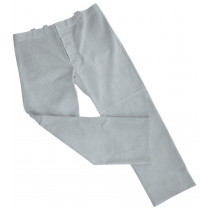
Welder pants in split cowhide leather EN ISO 11611
Wide range of security products for any type of industry and work
know us


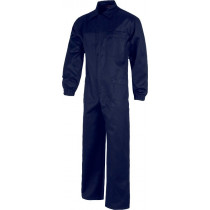
Welding clothing is not just workwear with some flame-retardant treatment: it is PPE designed and tested to withstand splashes of molten metal, sparks and radiant heat, and for that reason it must be certified to the EN ISO 11611 standard. An ordinary cotton boiler suit or a synthetic garment can catch fire, melt onto the skin or let through spatter that a certified garment would stop.
In this guide we explain what clothing is recommended for welding, what class 1 and class 2 mean, what a well-designed garment should have and what other equipment completes the protection. And if you already know what you are looking for, you can go straight to our flame-retardant clothing for welders category and choose your kit.
View flame-retardant clothing for welders
For welding, clothing that meets the following points is recommended:
The rest of the guide goes through each point so that you can choose with confidence.
EN ISO 11611 sets out the requirements for protective clothing for welding and allied processes. It is applied alongside the general standard for protective clothing requirements (EN ISO 13688), and it is the reference that must appear in the marking of any garment intended for use by welders.
The standard distinguishes two classes according to the level of protection required:
If a garment combines parts of both classes, it is classified in the lower one. So, if you work in demanding conditions, check that the whole garment – not just the main fabric – is class 2.
Garments may be marked with index A1 (limited flame spread by surface ignition) or A1+A2 (surface and edge). This is worth checking in the manufacturer's data sheet.
Welding protection has limits that are worth knowing:
The right class depends on the process and the conditions of the workstation. As a usual guide (always confirm with the manufacturer's data sheet and your health and safety department):
| Work situation | Level of demand | Recommended class |
|---|---|---|
| Welding with little spatter and low radiant heat (for example, TIG or light work) | Lower | Class 1 |
| Stick welding, MAG, oxy-fuel cutting, plasma or work with heavy spatter | Higher | Class 2 |
| Overhead welding or welding in awkward positions | Higher | Class 2 + additional protection (apron, sleeves) |
| Workshop with mixed exposure (welding and cutting) | Variable | Class 2 to be safe |
If you are unsure between the two, class 2 is the safe option: it protects across the whole range. To equip yourself without mistakes, see our flame-retardant clothing for welders and filter by the type of garment you need.
The fabric is not enough: the design protects too.
Underneath the protective garment, wear underwear made of cotton or another natural fibre. Synthetic fibres can melt and stick to the skin if they heat up.
Clothing certified to EN ISO 11611 protects the body, but it does not cover the head, face, hands or feet, which require their own PPE:
If you are equipping several welders or need advice on choosing between class 1 and class 2, our team can guide you according to your welding process.
Contact us and we will help you choose (or email us at: info@sekureco.eu)
In our Flame-retardant clothing for welders category you will find:
Check availability and sizes for each garment in the category.
EN ISO 11611, which governs protective clothing for welding and allied processes. It must appear on the label together with the class (1 or 2).
Class 1 protects in lower-risk situations (less spatter and less radiant heat) and class 2 in more demanding ones. If a garment mixes parts of both classes, it is classified in the lower one.
It is not advisable. Cotton without a flame-retardant treatment can catch fire from spatter; clothing certified to EN ISO 11611 is tested specifically for welding.
No. A generic flame-retardant garment does not necessarily meet the molten metal spatter requirements of EN ISO 11611. Always check that this standard appears on the label.
Follow the manufacturer's washing instructions and observe the maximum number of cycles stated. Avoid contaminating the garment with grease or solvents, as they reduce its protection against flame.
Cotton or another natural fibre. Synthetic fibres can melt and stick to the skin if they heat up.
Welder's clothing is an investment in safety that pays for itself every working day. At Sekureco.eu you will find garments certified to EN ISO 11611 in class 1 and 2, as well as helmets, glasses, gloves and footwear to complete the kit.
Browse all our flame-retardant clothing for welders and choose the class your process requires.
> CLOTHES AND COMPLEMENTS
Please sign in first.
Sign in