Discover the key differences between masks and half-masks for respiratory protection
Posted on2026-11-10
In industrial, chemical and construction environments, selecting the right respiratory protection equipment is vital for preventing irreversible occupational illnesses. A frequent source of confusion among occupational health and safety managers is the indiscriminate use of the terms mask and half-mask. Whilst both protect the respiratory tract against the inhalation of harmful agents, they comply with different regulations, structures and levels of protection depending on the type of hazard and its concentration in the air (TLV and OEL).
RESPIRATORY PROTECTION MASKS (FILTERING MASKS/FFP)
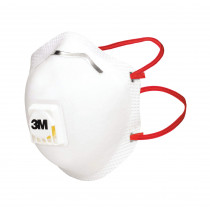
Self-filtering masks (commonly known as anti-dust masks or FFP) cover the nose, mouth and chin, and are made wholly or partly from a filtering material that forms the body of the mask itself. The applicable standard is EN 149 which specifies the safety requirements and test methods for filtering half-masks for protection against particles such as solid and liquid aerosols. Below is the classification by efficacy.
-
Classification by efficacy:
-
FFP1: Minimum filtration efficiency of 80% (indicated for non-toxic dust, masonry or DIY work).
-
FFP2: Minimum filtration efficiency of 94% (protection against solid and liquid aerosols of low/medium toxicity, pharmaceutical industry, joinery).
-
FFP3: Minimum filtration efficiency of 99% (high toxicity, fine asbestos dust, welding fumes, fine chemical industry and biological hazard).
-
Use and lifespan: as a general rule, these are single-use equipment (marked R or NR) and their maximum lifespan is limited to a working day (single-shift), depending on filter saturation and breathing resistance.
Discover the wide range of Respiratory Protection Masks available at Sekureco
RESPIRATORY PROTECTION HALF-MASKS (REUSABLE EQUIPMENT)
Unlike masks, the half-mask is a reusable facial component (made from elastomer, silicone or thermoplastic rubber) designed to accommodate interchangeable filters (against particles, gases, vapours or combined filters). It seals the nose, mouth and chin hermetically through an optimised facial adjustment harness. The applicable standard is EN 140 (for the facial piece), combined with EN 143 (particle filters) or EN 14387 (gas and vapour filters). Below is the classification of its mountable filters.
-
-
Particle filters (P1, P2, P3): retain dust, fumes and mists.
-
Chemical filters (Types A, B, E, K): designed to retain organic and inorganic gases and vapours, sulphur dioxide or ammonia according to the normative colour code.
-
Use and industrial advantage: as they are reusable, only filters are replaced when they reach their saturation or maximum resistance, which represents a highly cost-effective and sustainable solution for continuous industrial operations.
Discover Reusable Respiratory Protection Half-Masks at Sekureco
TECHNICAL COMPARISON TABLE: MASK VS. HALF-MASKS
| Technical Variable |
Filtering Mask (FFP) |
Reusable Half-Mask |
| European Standard |
EN 149 |
EN 140 + EN 143 / EN 14387 |
| Structure |
Entirely filtering body (single block) |
Silicone/elastomer facial piece + interchangeable filters |
| Type of Protection |
Mainly particles (dust, fumes, aerosols) |
Particles, gases, vapours or combined systems |
| Maintenance |
Disposable (lifespan of a work shift) |
Reusable (requires cleaning, disinfection and filter replacement) |
| Assigned Protection Factor |
Lower (according to class FFP1, FFP2, FFP3) |
Greater sealing capacity and adaptable facial fit |
MASKS AND HALF-MASKS – WHICH TO CHOOSE ACCORDING TO THE HAZARD?
1. Nature of the hazard:
Step 1 - Identify the Contaminant.
Determine whether you are faced exclusively with solid/liquid particles (dust, fibres, welding fumes) or whether there are toxic chemical gases and vapours in the environment.
2. Exposure level (OEL):
Step 2 - Concentration Measurement.
If concentrations exceed the permitted limits for FFP masks or specific chemical protection is required, the use of a half-mask with EN 14387-certified filters is mandatory.
3. Durability:
Step 3 - Comfort and Operating Cost.
For sporadic interventions, FFP masks offer practicality. For recurring industrial processes, half-masks guarantee greater ergonomics and lower long-term cost.
EQUIP YOUR STAFF WITH CERTIFIED RESPIRATORY PROTECTION
At Sekureco.eu we have an extensive professional stock of respiratory protection equipment compliant with European regulations. Ensure the health of your operatives with maximum technical assurance
 English GB
 Español
 Français
 Deutsch
 Italiano
 Português PT